As the legislative window nears, Circle's financial report tests the quality of 'de-trading'
Circle Internet Group plans to release its Q1 2026 financial report before the US stock market opens on Monday. The market is currently highly focused on how this stablecoin giant will use AI technology applications to offset the negative impact of the contraction in cryptocurrency trading.
According to FactSet's forecasted data, Circle's revenue for this quarter is expected to reach $715 million, a significant increase from $579 million last year. However, due to market volatility, analysts predict that its earnings per share will drop to 19 cents, lower than the 30 cents last year. Despite the current stock price being far below the high of nearly $300 reached after going public last year, Circle has still recorded a nearly 40% increase this year.
USDC Fundamentals Remain Strong
As the issuer of USDC, Circle has long gained profits by sharing interest from treasury reserves with Coinbase, and its business performance is usually closely linked to the activity level of the crypto market. It's worth noting that market concerns about Circle's fundamentals seem to have been dispelled by the latest data.
According to Bernstein's latest research report, as of May 5, 2026, the supply of USDC has reached about $78 billion, growing by about 78% from the end of 2024, far exceeding the overall growth rate of dollar stablecoins at 48%.
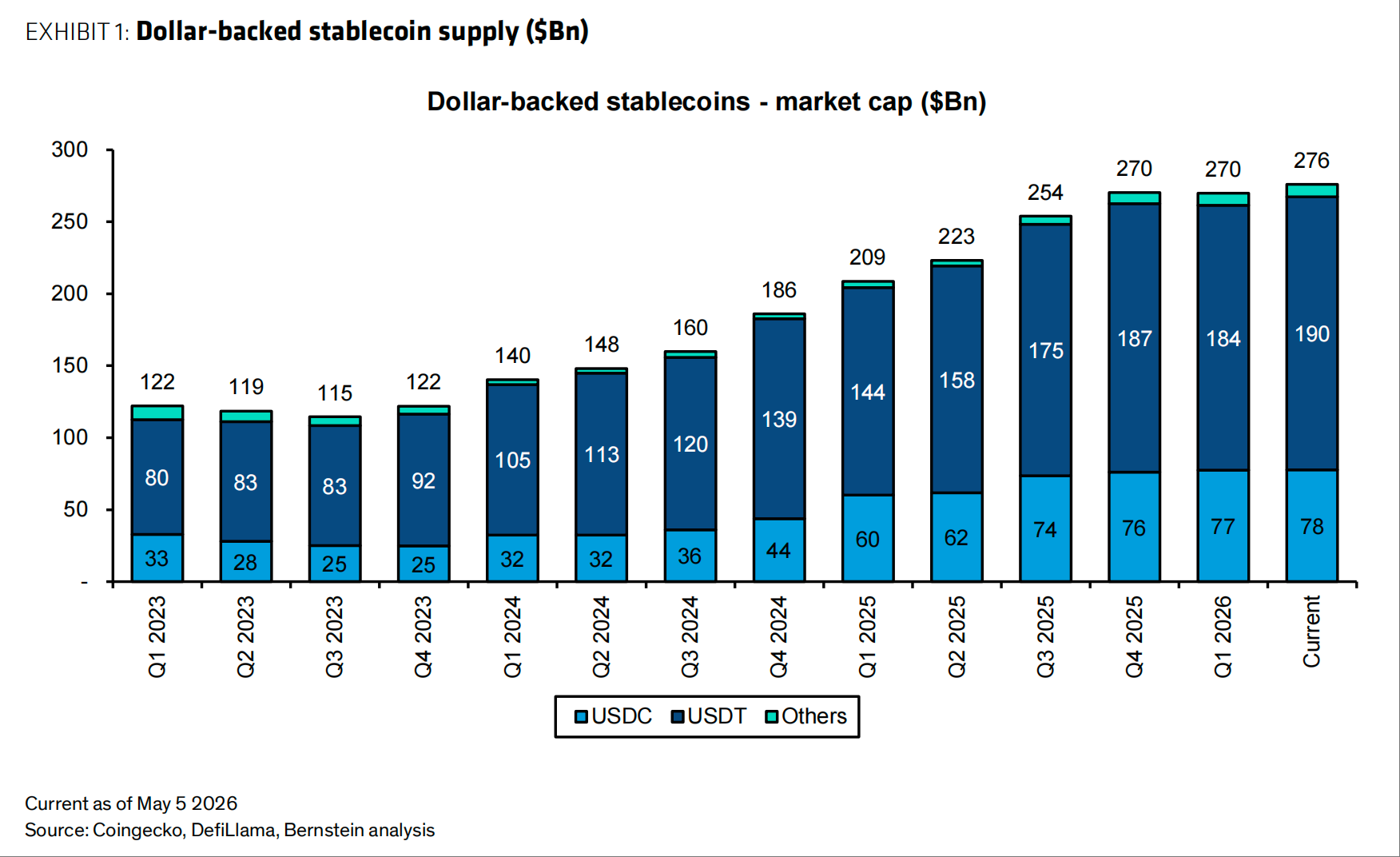
The on-chain transaction volume of USDC in the first quarter reached as high as $23 trillion, about three times that of the same period last year; the adjusted transaction volume also reached about $2.8 trillion, growing by about 250% year-on-year. USDC accounts for about 80% of all stablecoin transactions, and under the adjusted measurement, it has reached about 63%, a significant increase from 39% last year.
The Dual Impact of the CLARITY Act
Wall Street is closely monitoring the political maneuvering around the US Congress's cryptocurrency regulation bill. The disagreement between the banking industry and crypto companies regarding interest on stablecoin deposits has led to another postponement of the key bill's vote.
The banking industry is currently lobbying heavily for regulatory agencies to ban crypto companies from paying interest to stablecoin holders, fearing that if stablecoins have the ability to generate interest, it could lead to a massive shift of traditional bank deposits to crypto accounts, undermining the stability of the financial system.
However, Bernstein analysts believe that the market's concerns are logically confused. The report points out that the latest bipartisan compromise text distinguishes between the roles of "stablecoin issuers" and "yield distributors" — the bill explicitly prohibits issuers from directly paying passive returns similar to bank deposit interest, and Circle itself does not directly provide such returns to users.
The bill also clearly protects incentive structures tied to "real transaction activities," such as rewards based on transaction, payment, and usage behaviors, which is the core growth mechanism for USDC. Currently, Polymarket predicts that the probability of the bill passing has risen to 62%
市场有风险,内容仅供研究参考,不构成投资建议。