Cracks in Global Bond Market Begin to Emerge, U.S. Treasury Yields Approach Key Breakpoints
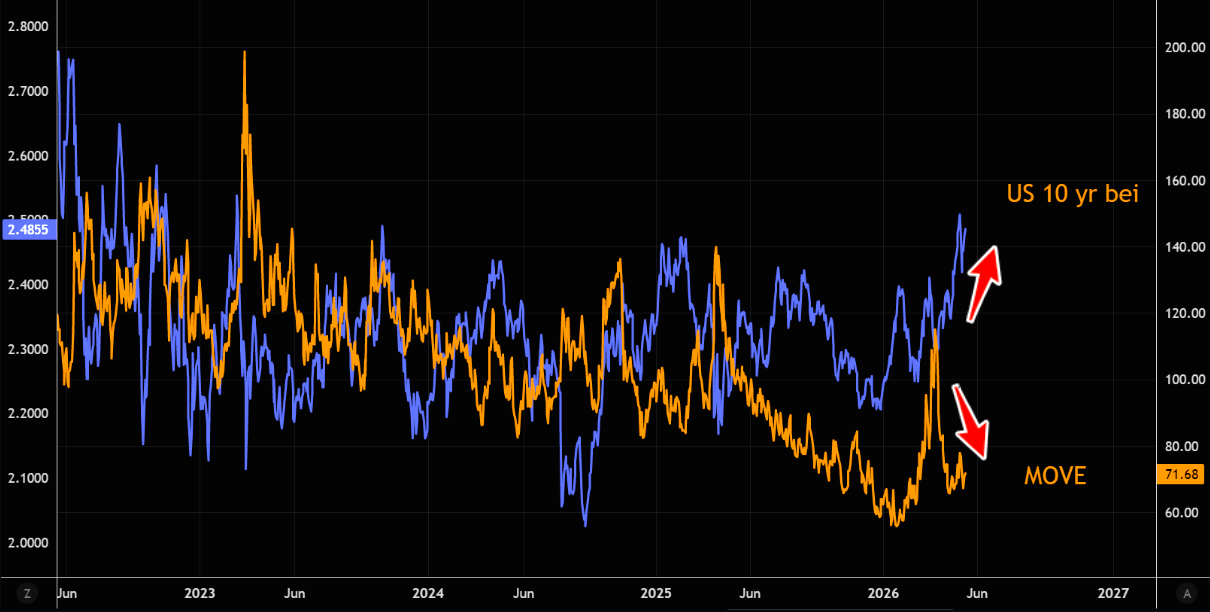
Interest rates in major global markets are approaching key technical breakout levels in tandem, while the bond volatility indicator MOVE remains at an unusually low level, a divergence in itself serving as a dangerous signal.
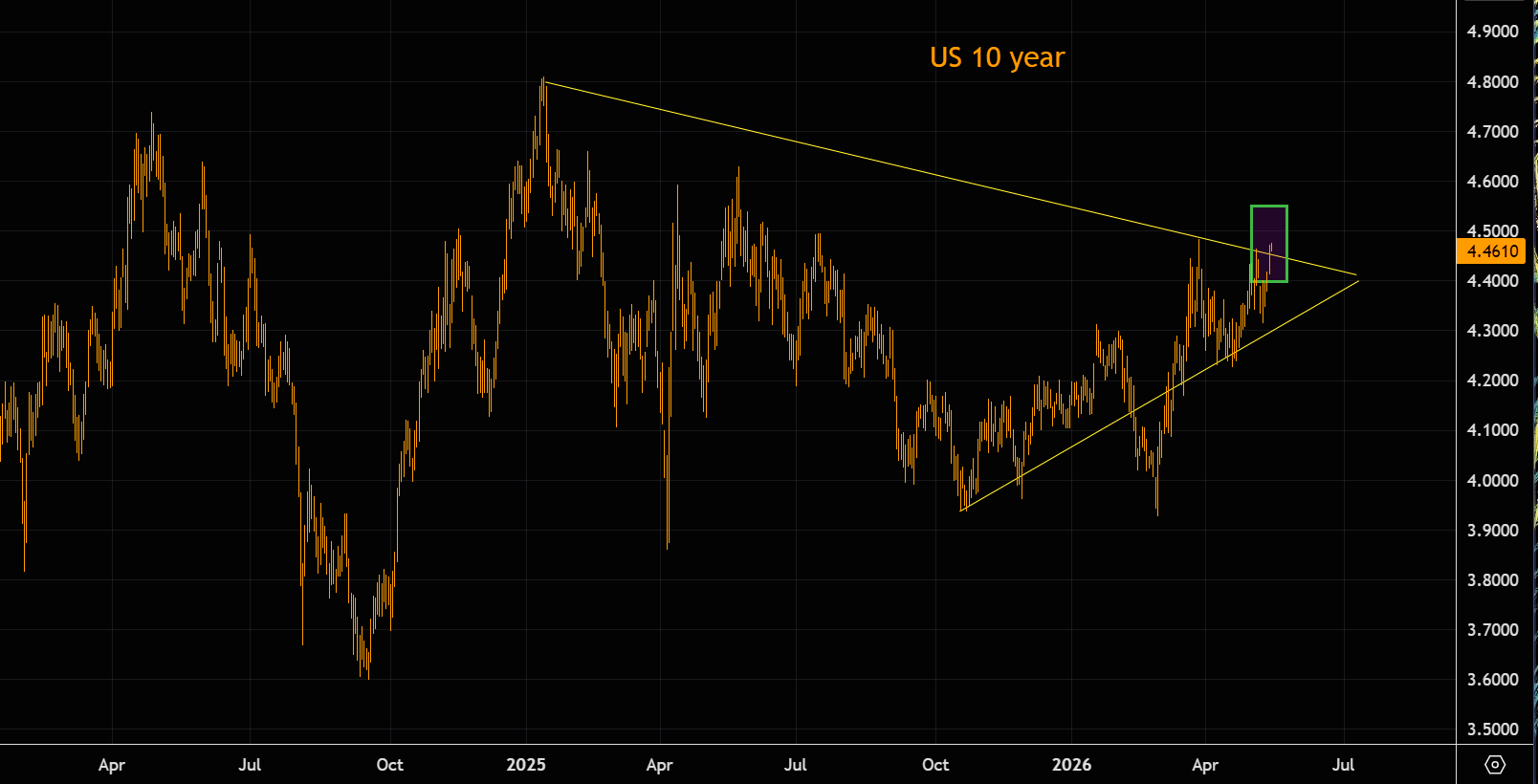
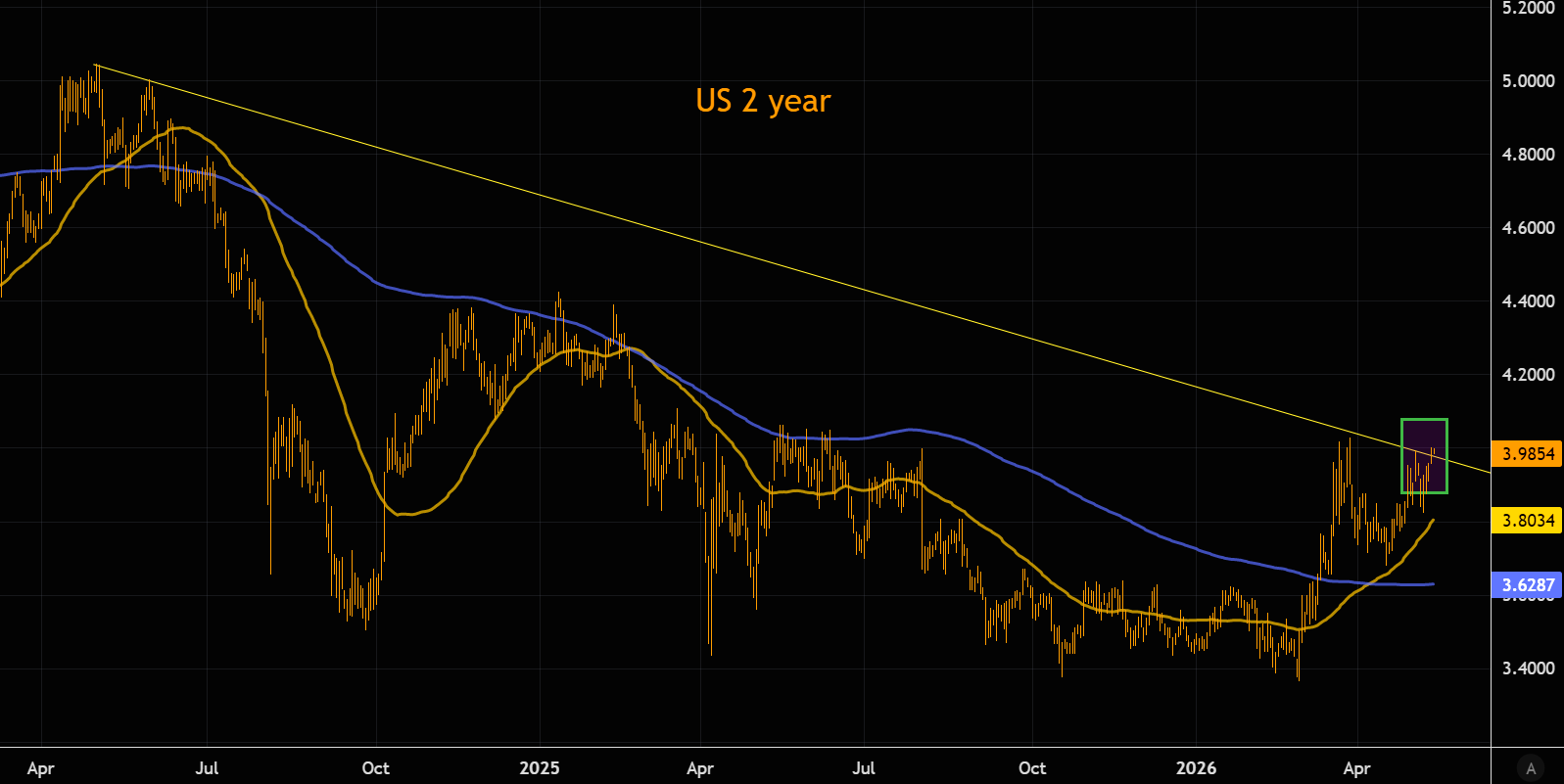
The yield on the 10-year U.S. Treasury note is the most closely watched technical node at present. Should the yield break through and hold above 4.5% again, it will trigger an important breakout upward, with a chain reaction of short covering and stop-loss orders potentially amplifying volatility swiftly. The 2-year yield is also not to be overlooked—it is approaching the key integer level of 4%, which also coincides with a long-term downtrend line. A golden cross signal was confirmed about a month ago, with technical pressure continuously accumulating.
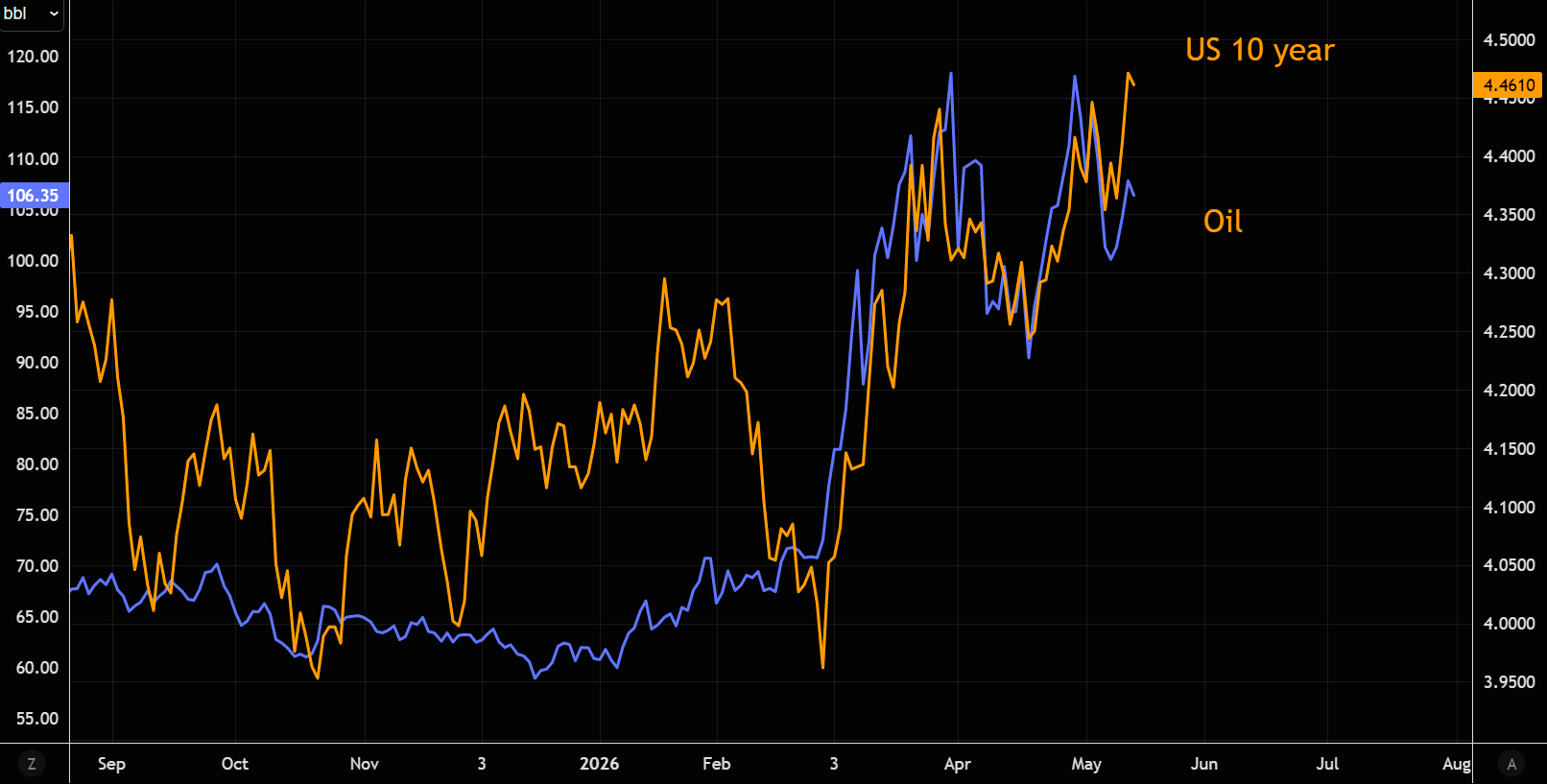
Inflation is the core fuel driving this round of rising interest rates. In April, the overall U.S. CPI rose by 3.8% year-on-year, the highest reading in three years, and this upward trend had already started well before the outbreak of the Iran war. The linkage between oil prices and interest rates is becoming increasingly tight, with the transmission effect of energy price increases on inflation becoming more "viscous". Inflation breakeven rates have continued to soar, with the synchronised rise in gasoline RBOB prices and the 10-year breakeven rate indicating that market concerns about medium-term inflation are quite real.
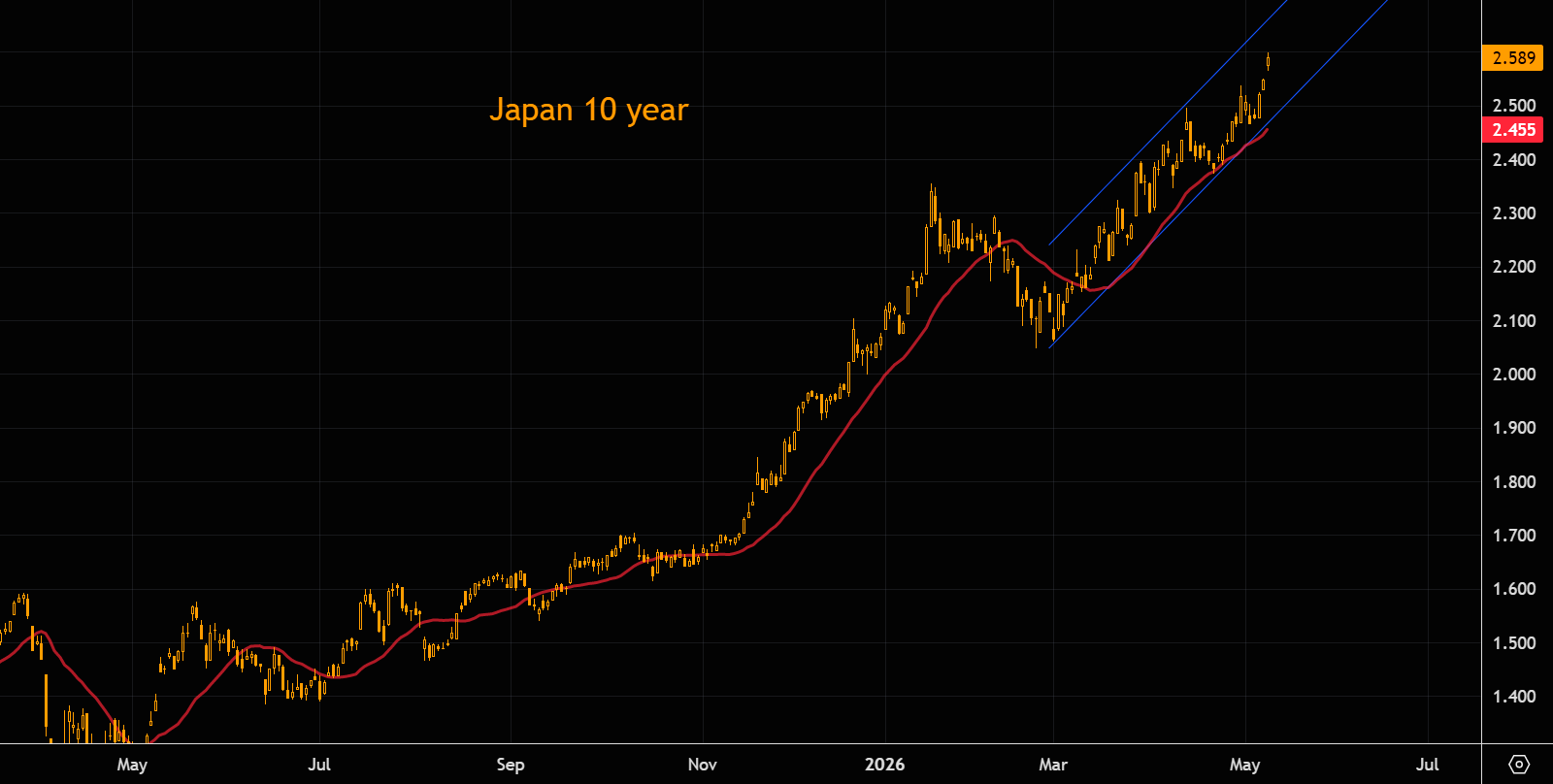
The movement in the Japanese market has added another layer of instability to the global interest rate system. The Japanese 10-year government bond yield continues to break higher, with the 21-day moving average barely retracing throughout the entire upward process. A weekly chart shows that the upward trend slope is becoming steeper. What's more alarming is the 30-year Japanese bond—the yield has returned to an extremely high level, approaching the upper boundary of a long-standing triangle pattern. Should it break through, due to the accumulation of a large number of complex positions and market psychology within this range, the market could quickly evolve into a violent short squeeze.
The core contradiction at present lies in the fact that oil prices, inflation expectations, U.S. Treasury technical pressures, and Japanese bond breakthrough risks are resonating synchronously, while bond volatility remains relatively low. How long this calm can last is the most pressing question the market is currently facing.
市场有风险,内容仅供研究参考,不构成投资建议。