European Consumer Sector Profits Down Over 12% in Q1
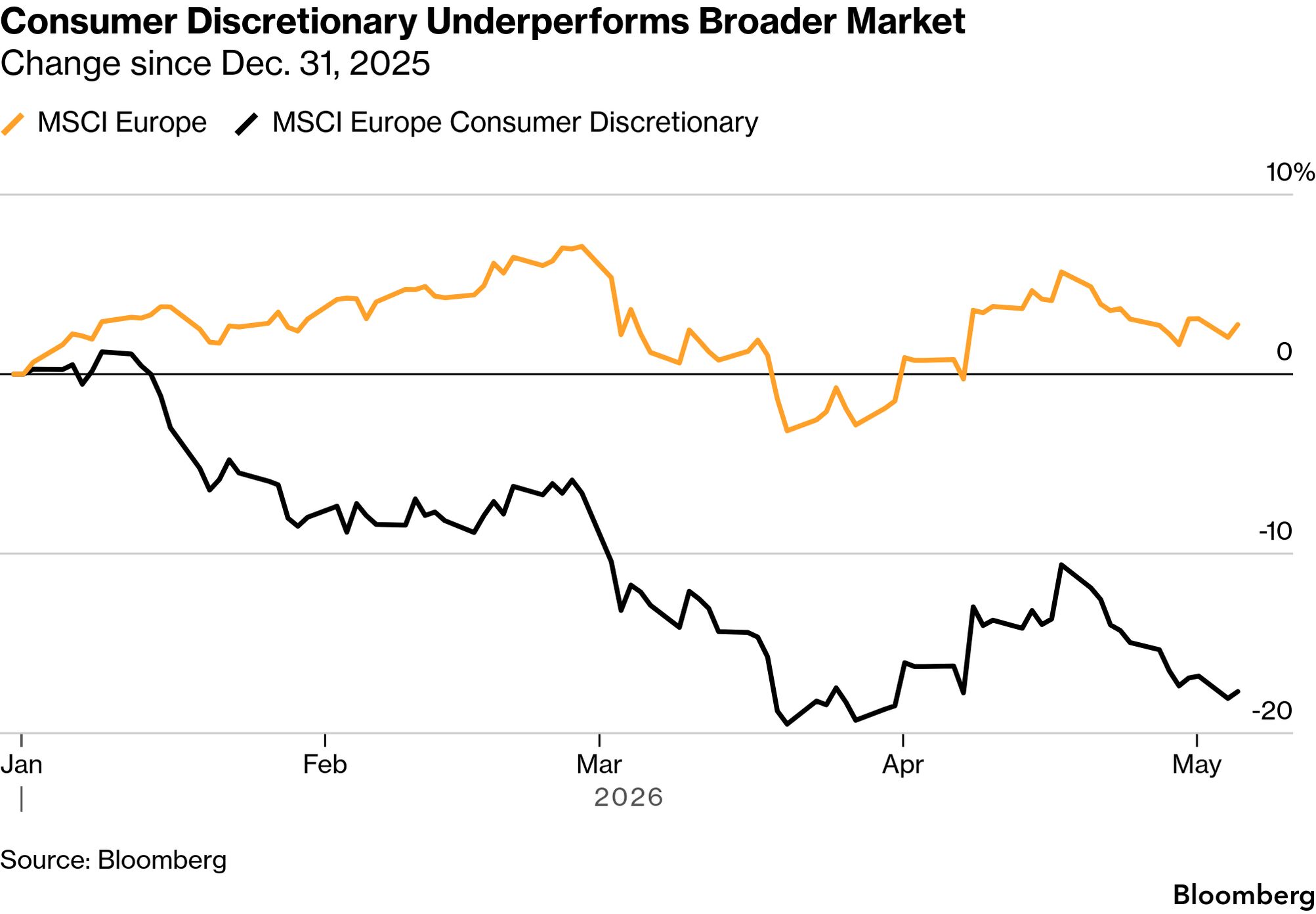
The financial report pressure in the European consumer sector is being exposed in earnest. Bloomberg industry research data shows that the MSCI Europe Consumer Discretionary Index's earnings per share in the first quarter have declined by more than 12%, significantly worse than the previously expected decline of 2.4%, with more than 80% of the companies that make up the index's market value having already reported their earnings.
This gap has made consumer discretionary the weakest-performing sector in the European reporting season. Meanwhile, the overall earnings growth of the MSCI Europe Index was 5.7%, indicating that the problem is not a comprehensive deterioration in European corporate profitability, but rather a greater pressure on the consumer chain.
Luxury Goods, Automobiles, and Hotels Under Pressure
The pressure is primarily on luxury goods, automotive, and hotel companies. Inflation erodes consumer purchasing power, tariff threats increase cost uncertainties for automakers, and competition in China compresses the growth space for European brands.
Geopolitical conflicts further amplify the pressures on the consumer sector. Deutsche Bank analyst Adam Cochrane stated that the impact of wars in Iran on the discretionary consumer sector is more pronounced, as non-food retail expenditure may be crowded out, and luxury goods are also affected by the reduction in tourism traffic.
The cooling demand for luxury goods companies has become apparent. LVMH and Kering both warned of weakening demand, the war in the Middle East affecting the activity of Dubai, a key shopping center, and lowering global consumer confidence. Even Hermes, which is usually more resilient to business cycles, has not been able to completely avoid this impact. The company's sales have declined and triggered a drop in stock prices, indicating that high-end and rare models can provide a buffer but are not enough to fully offset the cooling of external demand.
The hotel industry is also impacted, with traffic changes quickly reflecting occupancy and income expectations. Accor has stated that the strong start in the Middle East at the beginning of the year was interrupted by conflicts, with hotels in the United Arab Emirates being particularly affected, and the UAE accounts for about 3% of their total room count.
The pressures on the automotive industry are more complex. The sustainability of Stellantis's recovery in the United States is questioned by investors, Ferrari increased profits but had a decrease in first-quarter deliveries, partly due to wealthy clients in the Middle East delaying purchases.
The larger variable remains tariffs. US President Trump plans to impose a 25% tariff on cars and trucks from the European Union if the EU does not quickly approve a long-delayed trade agreement, making the profit of European automakers more difficult to price in the second half of the year.
Local Bright Spots Do Not Change Overall Downgrades
It's not all bad within the sector. Mercedes-Benz expects to be supported by new models and strong orders in the second half of the year
市场有风险,内容仅供研究参考,不构成投资建议。