Imminent Samsung Strike Sends Shenzhen Huaqiangbei DDR4 Prices Soaring by 20%
Samsung Electronics' labor negotiations collapsed on the 13th, with about 40,000 union members announcing a large-scale strike set to begin on the 21st of this month and last for 18 days. As soon as the news came out, the global spot memory market quickly responded, with the continuous decline that had persisted for weeks suddenly stopping. The spot price of DDR4 8Gb chips in Shenzhen Huaqiangbei electronic market quickly rose by over 20% in a single week, significantly raising market panic.
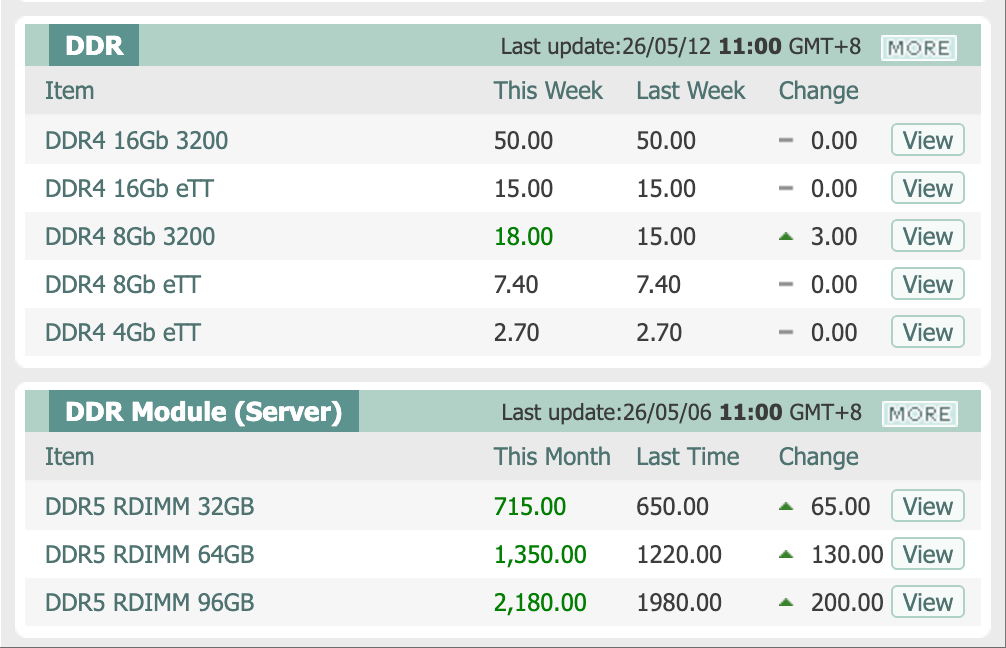
According to the latest data from China Flash Market (CFM), the spot price of DDR4 8Gb 3200 has risen to $18 this week, making it one of the most significantly rising products in the market recently. At the same time, the prices of NAND Flash wafers that had been under pressure, including mainstream specifications such as 1Tb QLC, 1Tb TLC, and 512Gb TLC, have also fully stabilized, with the price downward pressure from the previous inventory reduction clearly weakening.
The demand for server-side DDR5 remains strong, with the price of DDR5 RDIMM 64GB modules rising to $1,350 this month, a monthly increase of 11%, and the 96GB specification increasing by 10% in sync. Analysts point out that the continued strong demand for AI servers, high-performance computing, and high bandwidth memory (HBM) has already tightened the supply and demand pattern. The additional risk of Samsung's strike further magnifies market expectations for price trends.
Huaqiangbei has always been seen as an important barometer for the global electronic components and memory spot market, and its pricing often leads in response to supply and demand changes compared to original equipment manufacturer (OEM) contract prices. Institutional analysts have said that the psychological impact of Samsung's strike on downstream customers may far exceed the actual reduction in production. Especially when the expectations for high-end DRAM supply are still unclear, customers generally take a wait-and-see attitude, and their willingness to place orders in the short term is suppressed.
Looking at the broader market context, Chinese channel merchants have long been in an inventory reduction cycle, continuously lowering prices to digest inventory backlog, and the market's overall willingness to follow demand has been insufficient. The supply concerns triggered by the breakdown of Samsung's labor negotiations quickly changed market sentiment. DDR4, a technologically mature product with long-term low prices, took the lead in raising prices this time, which the industry interprets as a clear signal that the market has started to layout in advance and seize sources of goods.
市场有风险,内容仅供研究参考,不构成投资建议。