Nikkei 225 Index Exceeds 65,000 Points, Setting a New Record
On May 25th, Tokyo's stock market witnessed a historic breakthrough. The Nikkei average index soared after the opening bell, spiking more than 1,600 points during the session and for the first time successfully passed the 65,000 mark, setting a new historical record. As of press time, the Nikkei average index rose more than 3% intraday, reporting 65,243.89. At the same time, the Topix index also gained momentum, surpassing the historical high set on February 27th of this year.
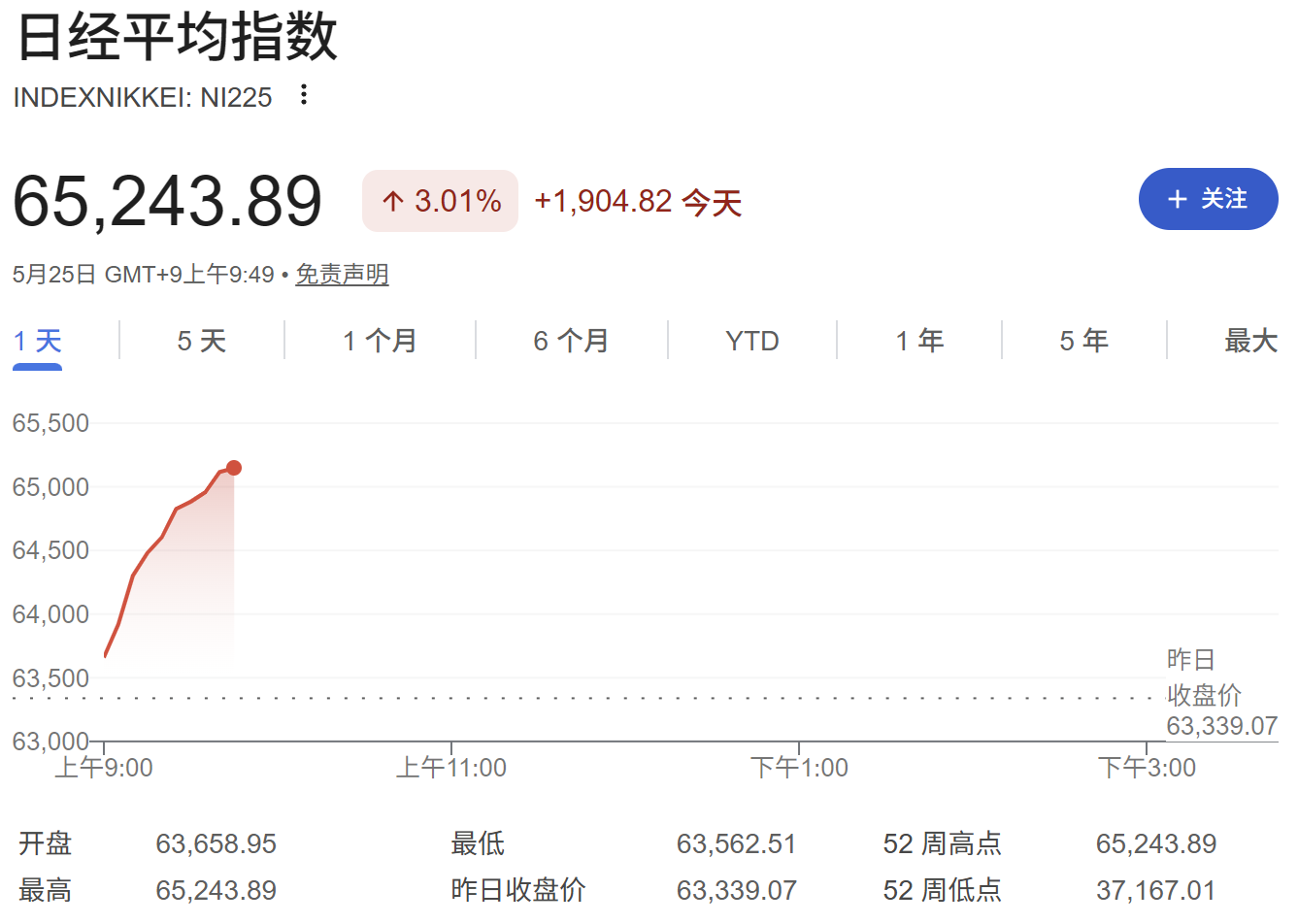
The direct catalyst for this outburst came from the strong pull of overseas markets: on the one hand, due to market expectations of progress in US-Iran negotiations, the US Dow Jones index has refreshed historical highs for two consecutive days; on the other hand, the US semiconductor sector faced a rush of funds over the weekend, with the Philadelphia Semiconductor Index rising significantly by 2%. This overseas fervor swept the Tokyo market on the 25th, driving a comprehensive strengthening of related concept stocks.
However, looking at a deeper background, the Financial Times of the UK reported that the underlying force of Japan's stock market surge is rooted in the "AI boom" sweeping the market and the strong return of retail investors. As overseas funds and domestic investors in Japan increasingly view Japanese technology companies as key beneficiaries in the global AI and chip wars, the daily trading volume of the Tokyo Stock Exchange in the first three weeks of May has historically broken through the 1 trillion yen mark for the first time, nearly doubling compared to the same period last year.
The power of Japanese retail investors is having an unprecedented impact on the stock market. In addition to steadily increasing their share in formal exchanges, a large number of retail investors are deeply involved through over-the-counter trading systems, bringing Japan's overall retail activity to its highest point since the economic bubble period of the 1980s. Although the overall direction of the market is still dominated by large institutions, retail investors' extremely high participation has injected a huge amount of intraday trading volume and high volatility into the market. At present, retail investors are not only buying the broad market index but also precisely allocating funds to specific stocks with AI and technology themes, such as Furukawa Electric and Fujikura. This shift in asset allocation from traditional savings in banks to high-yield assets also coincides with the Japanese government's recent policy direction of encouraging the public "from savings to investment" to cope with high interest rates and increase retirement income.
市场有风险,内容仅供研究参考,不构成投资建议。