Nvidia and Corning Announce Multi-Year Collaboration
NVIDIA and Corning announced on Wednesday a multi-year partnership, with Corning building three advanced manufacturing facilities in North Carolina and Texas, dedicated to serving NVIDIA's optical technology needs. The companies said that the collaboration would create at least 3,000 jobs and increase Corning's optical manufacturing capabilities in the United States by tenfold and its fiber optic production by more than 50%.
According to regulatory filings submitted on Wednesday, NVIDIA also acquired rights to $500 million worth of Corning shares. NVIDIA may obtain up to 3 million Corning shares at a price of $0.0001 per share and has the right to purchase up to 15 million Corning shares at an exercise price of $180.
The market is focused on this deal because NVIDIA may be pushing optical fibers further into the interior of AI cabinets. As reported by CNBC, NVIDIA is likely preparing to replace copper wires with Corning optical fibers in cabinet-level AI systems, a technical direction commonly known as co-packaged optics.
Huang Renxun once stated at the 2025 GTC conference that co-packaged optics are crucial for AI infrastructure. With the increasing number of GPUs, the bottleneck of AI systems is no longer just chip computing power but also whether data can be transmitted faster and with lower energy consumption within the chips, cabinets, and data centers.
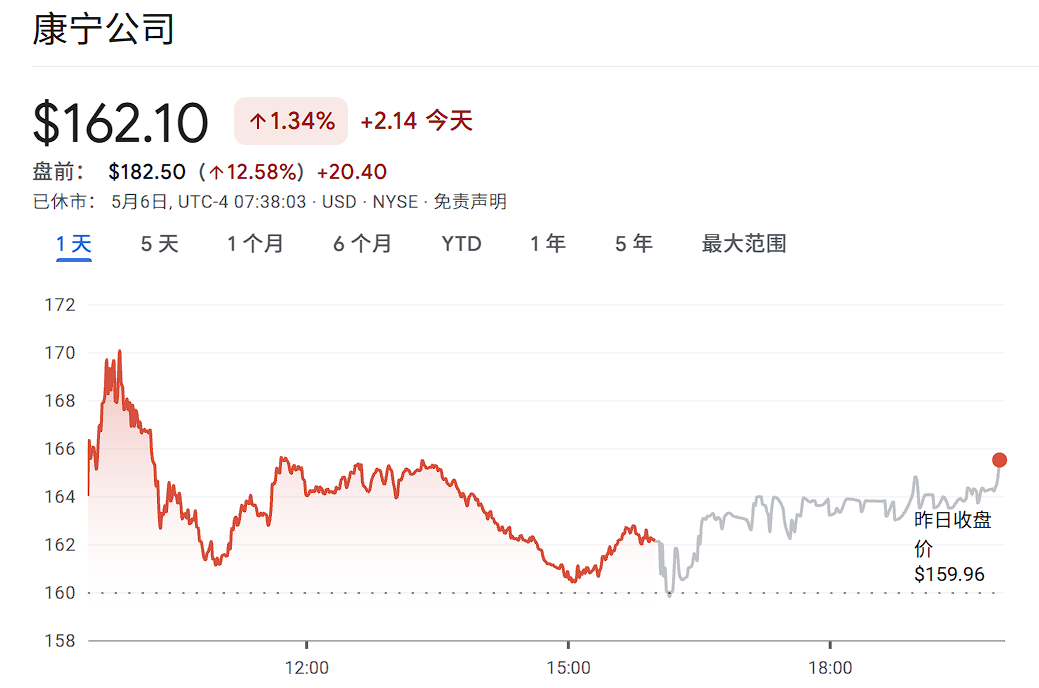
Following the announcement, Corning's US stocks rose by 13% before the market opened, reflecting that the market views this cooperation as a new variable in the AI infrastructure chain.
The main logic of replacing copper wires with optical fibers is energy consumption. Copper wires transmit electrons, while optical fibers transmit photons. Corning CEO Wendell Weeks stated in an interview with CNBC in January that the energy consumption of moving photons is 5 to 20 times lower than that of moving electrons. Omdia Enterprise Infrastructure Researcher Vlad Galabov also said that placing the photoelectric conversion process next to the computing chip can reduce the energy waste caused by circuit board transmission.
This transformation has turned Corning from a traditional glass manufacturer into a key supplier in the AI infrastructure chain. The company was more often associated with Apple iPhone display glass in the past, but optical communication has become its largest and fastest-growing business, with Corning's stock price rising by more than 250% in the past year as of Tuesday's closing.
市场有风险,内容仅供研究参考,不构成投资建议。