South Korean AI Stocks Go Skyrocketing, Risk Signals Intensify
The KOSPI index recently completed one of the most aggressive short squeezes of the year, but then left a huge shooting star candlestick pattern on the weekly chart. This type of pattern usually appears at the beginning stage of an overextended one-way upward momentum and short-term top building, and whether it can be confirmed later still needs to observe the direction of the next candlestick.
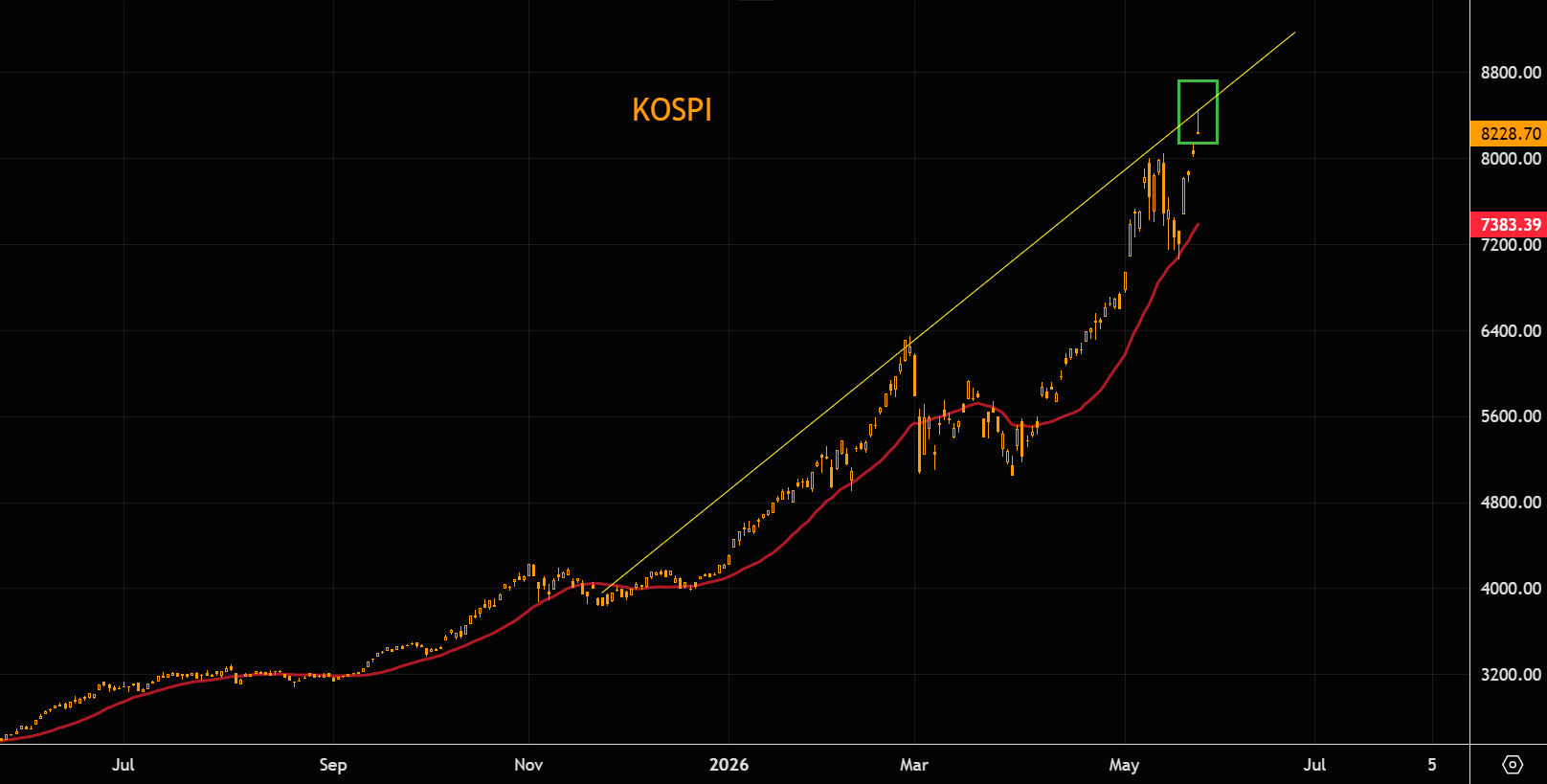
At the same time, KOSPI is testing the upper pressure line corresponding to two phased highs this year, and the deviation between the index and the 21-day moving average has also widened significantly, indicating that the slope of this round of rise is quite steep.
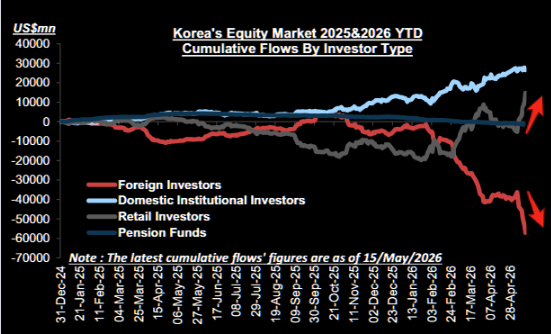
The spread speed of retail investor sentiment is also worth noting. Data from the Korean Financial Supervisory Service shows that in the first quarter of this year, the total financing balance of the top ten brokers in Korea reached 27.2 trillion won, equivalent to 18.5 billion US dollars, among which investors aged 50 and above accounted for more than 60%, more than double that of the same period last year. This group traditionally prefers fixed deposits and real estate, but now it has borrowed heavily to enter the market, and the FOMO sentiment has spread to conservative age groups.
The implicit risks at the market structure level are even more complicated. ELS (equity-linked structured products) widely held by Korean households actually embed a large number of downward bear option positions in the market. Once the market reverses, dealers will be forced to hedge dynamically, forming mechanical selling pressure, which may trigger non-linear acceleration of the decline. With the leveraged ETN, financing balance, and increasingly crowded semiconductor and AI positions, the behavior pattern of KOSPI is increasingly approaching that of a high beta momentum volatility product, rather than a traditional stock index.
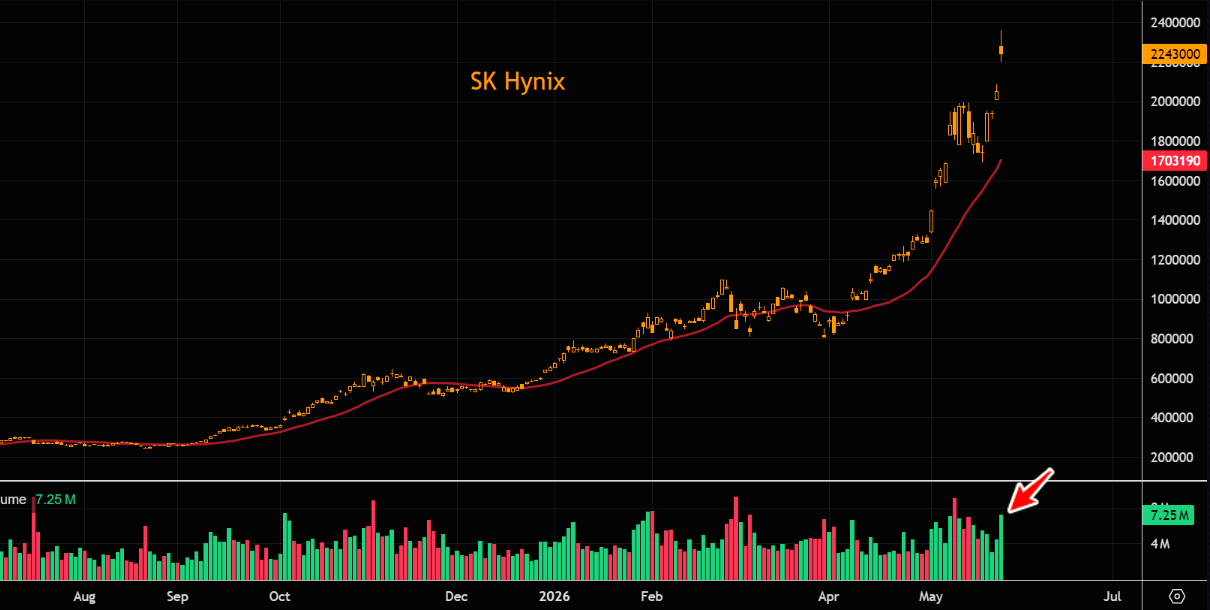
The leveraged ecosystem of the cryptocurrency market has also penetrated it. The 10x leveraged perpetual contracts of Korean stocks such as SK Hynix began to appear in February 2026, and the scale expanded dramatically in late March following the acceleration of AI and semiconductor trends, with billions of dollars flowing into stocks, AI, and commodity-attached perpetual contracts. The trading characteristics of SK Hynix have increasingly resembled a global momentum tool, rather than a purely semiconductor company stock.
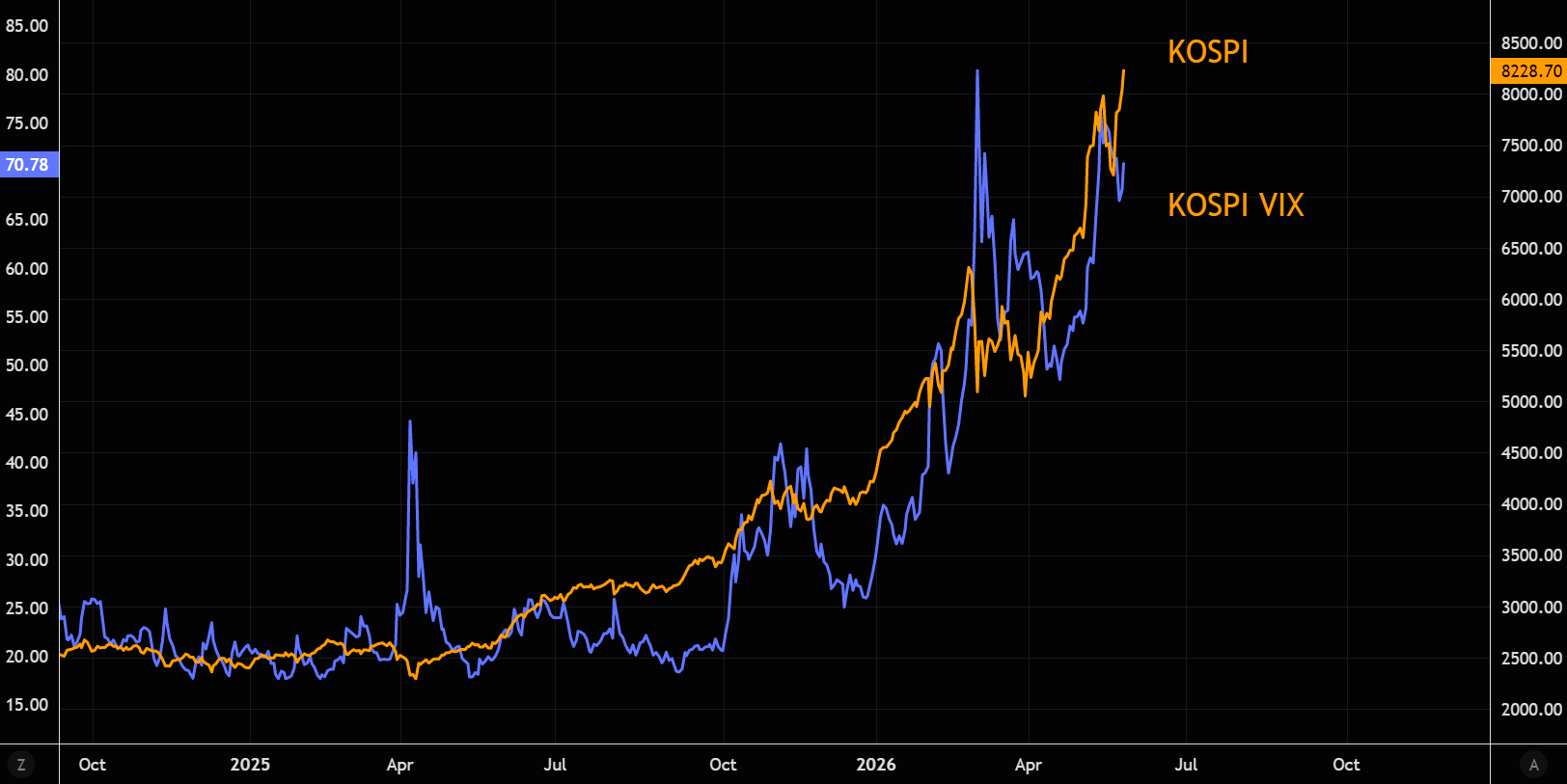
The volatility indicators are also in an abnormal range. The implied volatility of KOSPI is currently about 71, corresponding to a daily fluctuation range of about 4.5%, which is an extreme level for a major stock index. It is worth noting that the recent round of rising has not triggered a panic rush for call options in the market. Whether the calmness of the options market is waiting for the next short squeeze or an early signal of exhaustion of momentum is still uncertain.
Fundamentally, Korean chip manufacturers currently control about 68% of the global DRAM market, and the continuous push of AI demand has driven the export of high-speed growth. The fundamental support is not lacking. But it is this strength that attracts an overly concentrated global position. The current AI trading is increasingly like a global leveraged system built around a very small number of semiconductor targets, and once the momentum reverses, the vulnerability of the entire ecosystem will be exposed simultaneously.
市场有风险,内容仅供研究参考,不构成投资建议。