Tiger Securities drops 40%, Futu Holdings drops 33%, Interactive Brokers rises 11% in pre-American market
Before U.S. stocks open, two of the most representative internet cross-border brokerage firms targeting investors within China are facing selling pressure. Tiger Brokers (TIGR) fell by 40%, Futu Holdings (FUTU) fell by 33%, following an announcement by eight departments to comprehensively rectify illegal cross-border securities, futures, and fund management activities.
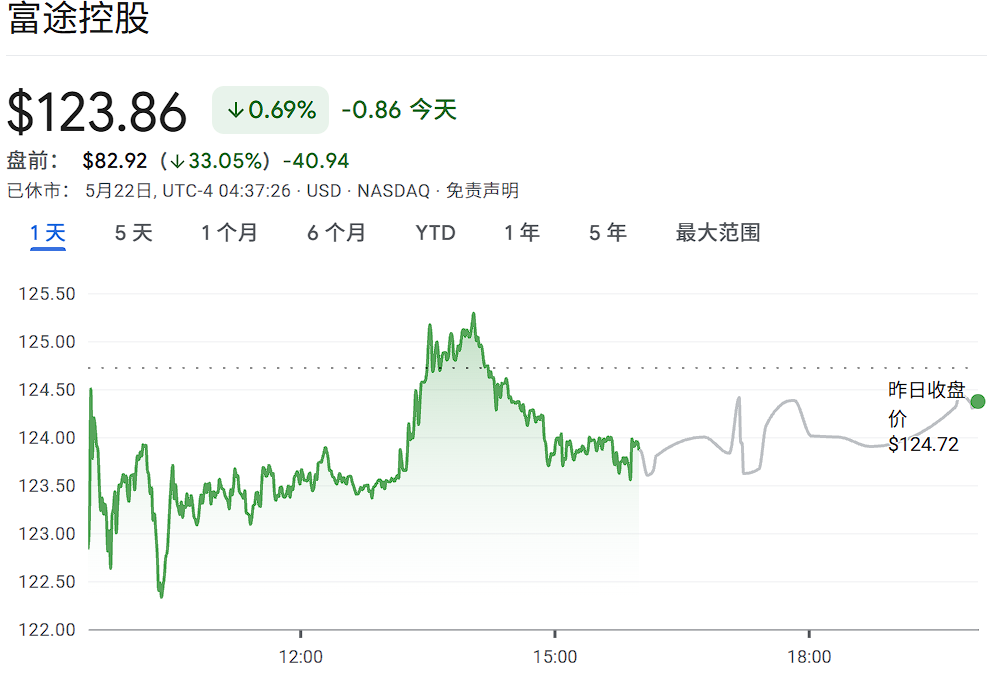
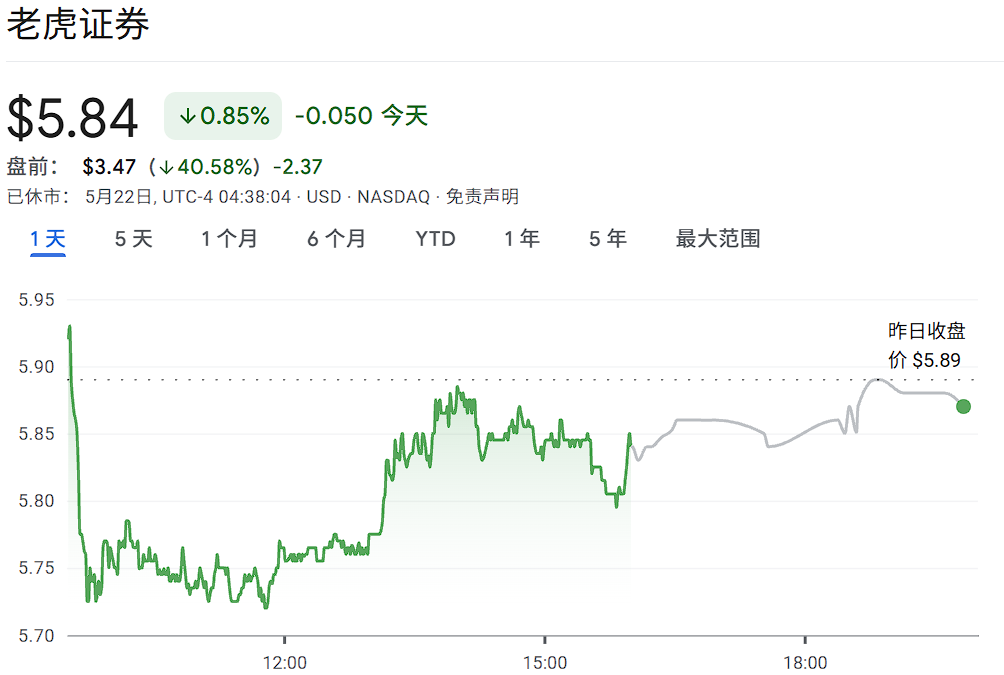
2-year concentrated rectification period with "sell only, not buy" policy for existing business
On May 22nd, the China Securities Regulatory Commission, Ministry of Industry and Information Technology, Ministry of Public Security, People's Bank of China, State Administration for Market Regulation, Financial Regulatory General Administration, National Internet Information Office, and State Administration of Foreign Exchange issued a joint document titled "Comprehensive Rectification Plan for Illegal Cross-Border Securities, Futures, and Fund Management Activities" (Document No. [2026] 28), which has been approved by the State Council.
The current policy measures have significantly escalated compared to the earlier rectification initiated at the end of 2022. The range of rectification has achieved full chain coverage—from marketing solicitation, account opening, transaction instruction processing, to fund transfer; all business segments have been included in the prohibition, strictly prohibiting foreign institutions from illegally providing account opening and transaction services within the territory.
The plan sets up a 2-year concentrated rectification period specifically to clear illegal existing businesses: During the rectification period, overseas institutions are prohibited from providing buy transactions and fund transfer services to existing investors, only allowing one-way selling and fund withdrawal; after the rectification period, the relevant domestic websites, trading software, and supporting servers must be completely shut down.
Tiger and Futu bear the brunt
The core business models of Tiger Brokers and Futu Holdings have long been highly dependent on domestic investors opening foreign accounts and trading U.S. and Hong Kong stocks through their platforms. This model corresponds exactly to the “illegal cross-border operating activities” defined by the regulatory document—The plan clearly states that "foreign institutions operating securities futures fund businesses within the territory without approval from the State Council's securities supervision authority constitute illegal cross-border operating activities and should be legally eliminated".
On a business level, the impact of the plan on both companies is systemic:
Marketing end: All domestic websites, apps, information pushes, rebate activities, etc., are completely forbidden, closing customer acquisition channels;
Account opening and trading end: Cross-border acceptance of account opening applications and trading instructions is completely prohibited, halting new business;
Existing business end: Only one-way selling and fund transfer are allowed within 2 years, and the scale of existing assets will continue to decrease naturally;
Domestic cooperation end: Marketing, technical, customer service, and other supportive behaviors of related and cooperative entities are prohibited, and domestic entities need to complete business separation;
Funding channel end: Banks will strengthen the review of currency exchange and cross-border transfers, and underground banks and other illegal channels are also simultaneously cracked down upon.
Interactive Brokers rises against the trend
In contrast to the setbacks faced by Tiger and Futu, Interactive Brokers (IBKR) rose by more than 11% before the market, becoming a "contrarian beneficiary" under the same regulatory event.
When the boundaries of
市场有风险,内容仅供研究参考,不构成投资建议。