U.S. Strategic Petroleum Reserve Records Largest Weekly Decline in 45 Years
WTI crude oil broke through $103.50 a barrel during Wednesday's trading, while Brent crude oil is trading near $108. The International Energy Agency pointed out in its latest monthly report that global observable oil inventories decreased by about 4 million barrels per day from March to April, setting a historical record, and warned that even if the conflict in the Middle East ends next month, the market will still be in a "severe supply shortage" state before October.
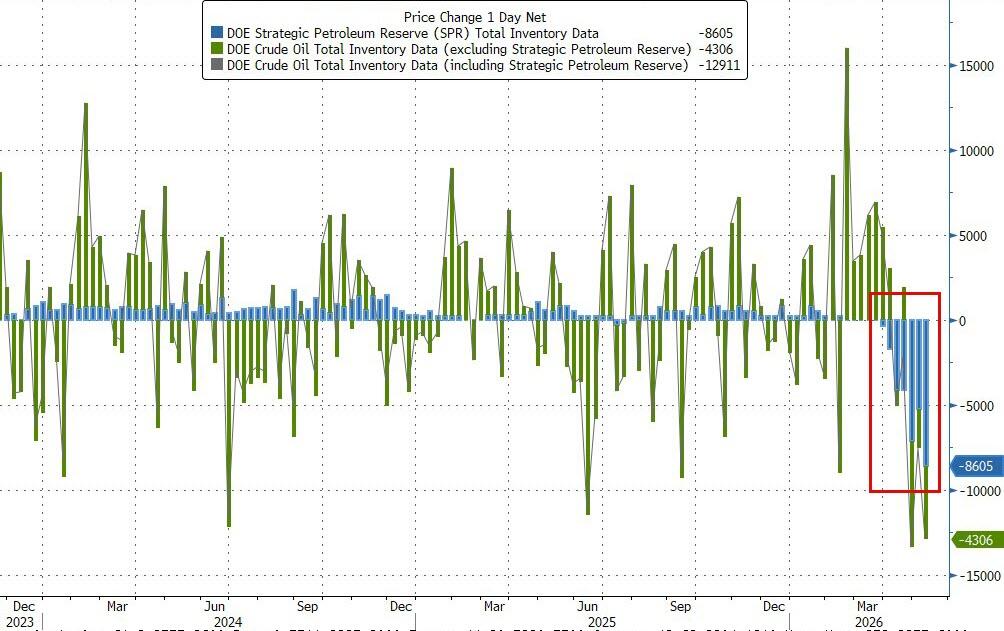
The inventory data released by the U.S. Energy Information Administration on the same day further strengthened the expectations of supply tightness. The crude oil inventory decreased by 4.3 million barrels last week, higher than the market's expected 2.5 million barrels, marking the third consecutive week of unexpected drawdowns. The inventory in the Cushing region also fell by 1.7 million barrels, while the gasoline inventory has been declining for the 13th consecutive week, with a decrease of 4.08 million barrels.
The consumption of strategic petroleum reserves is particularly concerning. The single-week drawdown of SPR last week reached 8.6 million barrels, the largest single-week decrease in 45 years.
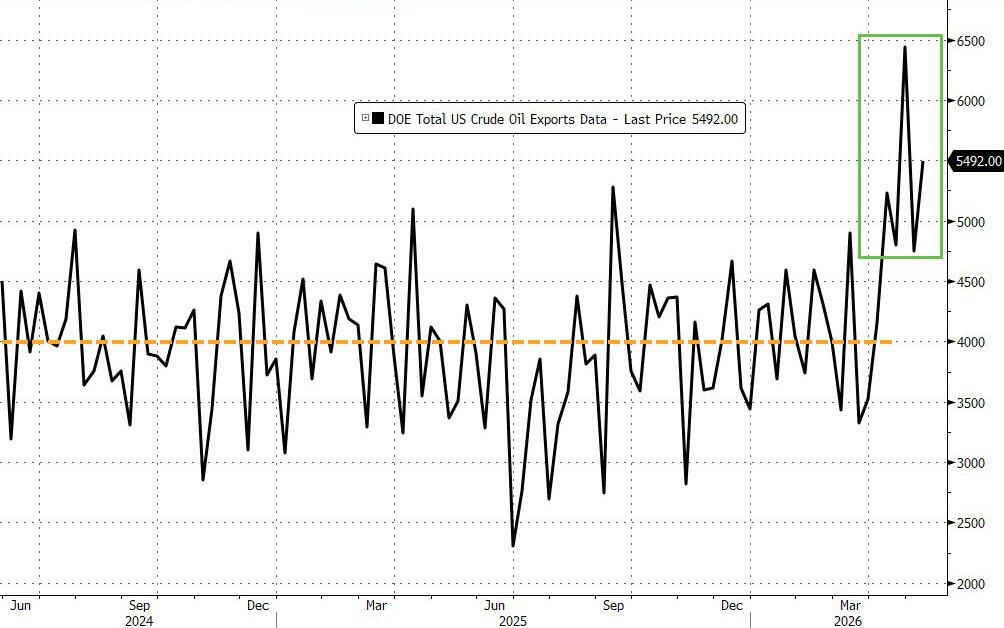
Meanwhile, U.S. crude oil production rebounded last week, and export volumes also increased to about 5.5 million barrels/day, approaching the recent high of 6 million barrels/day.
It is worth noting that the import volume of crude oil from Venezuela has risen to 598,000 barrels/day, the highest level since the U.S. imposed import restrictions on Venezuela in 2019.
Morgan Stanley's commodity strategist, Martijn Rats, stated in his report on Monday that this oil supply shock is the largest in history for the oil market, and it is "neither an exaggeration nor a dispute." The bank estimates that due to the time needed to restart oil fields, repair refineries, and reallocate oil tankers, the market will lose an additional 1 billion barrels of supply in 2026.
Saudi Arabia has reported to OPEC that its production has fallen to the lowest level since 1990. The CEO of pipeline operator Plains All American, Willie Chiang, said in last week's earnings call that the destocking environment is expected to continue for several months, ultimately leading to a restocking demand in the longer cycle. As the summer peak oil consumption season approaches, market volatility could intensify further.
市场有风险,内容仅供研究参考,不构成投资建议。