US Consumer Confidence Dips Slightly, Inflation Expectations Hit Yearly High
The Conference Board's Chief Economist, Dana Peterson, attributed the decline in confidence in May to the escalation of the war in the Middle East intensifying consumers' concerns about inflation.
The overall data presents a mixed picture. The present situation index, which measures current business and employment market conditions, fell by 3.2 points to 121.2, while the expectations index, reflecting consumers' expectations for income, business, and the employment market over the next six months, rose by 1.0 point to 74.4, the highest for the year. The divergence between the two sub-indexes reflects the subtle mindset of consumers becoming more cautious about the present but slightly improving expectations for the future.
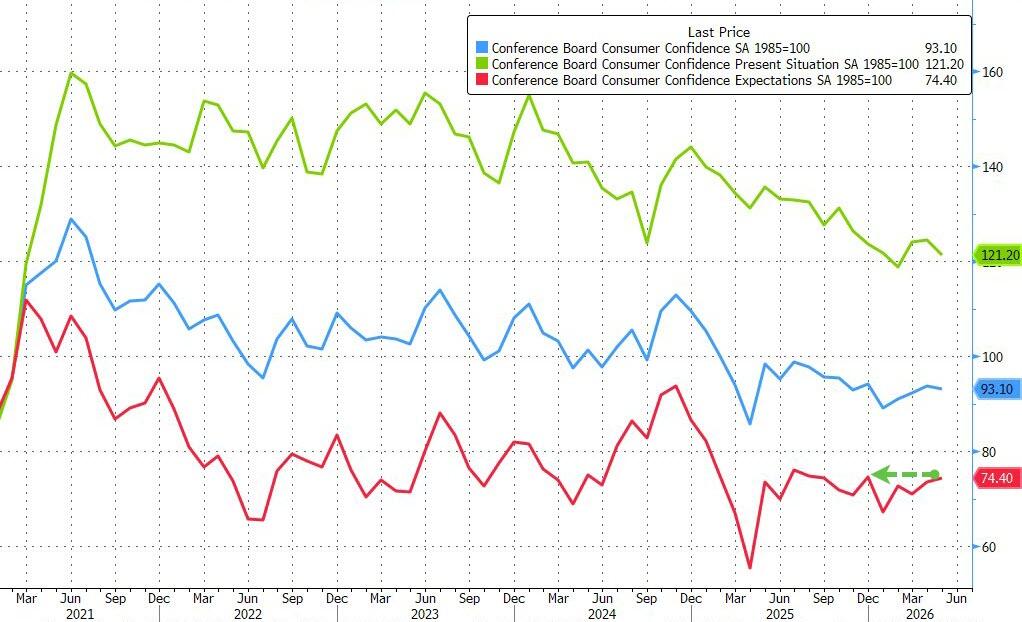
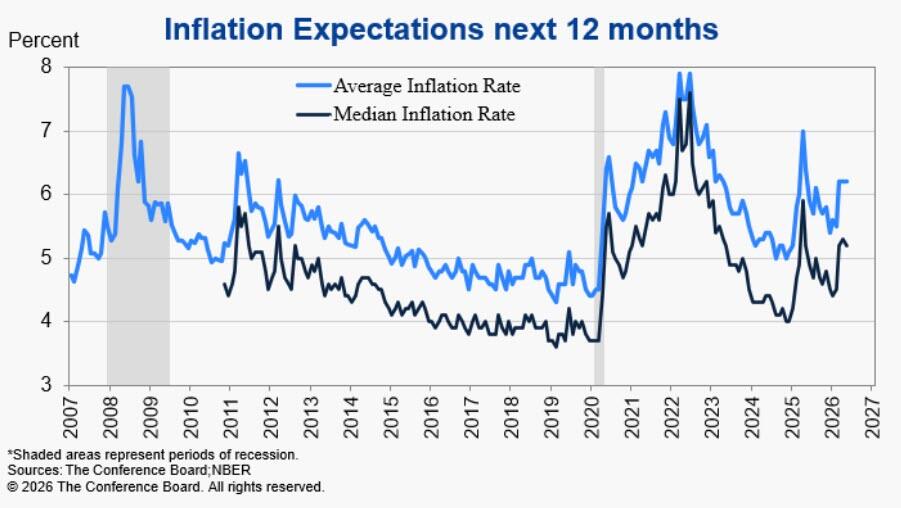
In terms of inflation expectations, consumers' average and median expectations for inflation over the next 12 months have slightly receded, but they remain high overall. In the consumer self-completed questionnaire, the frequency of mentions of prices and oil and gas prices rose for the second consecutive month, and expressions involving war, geopolitics, and conflict continued to be dense, showing that the Middle East situation remains a major psychological pressure source for the potential impact on consumers' wallets.
Looking at the breakdown by demographic groups, confidence rose slightly among the 35 to 54 age group, and the six-month moving average confidence of high-income groups also showed an upward trend. When classified by political inclination, Republicans remain the most optimistic, and independents are the only group with a month-on-month increase in confidence.
The overall trend in the labor market remains weak, and whether consumer expectations can continue to improve against this backdrop will be a key observation point for subsequent data.
市场有风险,内容仅供研究参考,不构成投资建议。