VIX Approaches Natural Bottom, Equity and Bond Volatility Gap Heralds Impending Storm
The VIX has currently retreated to its lowest level since the outbreak of the Iran war, hitting a new low since early February. It is noteworthy that while the S&P 500 index itself is still slightly below its mid-May peak, the VIX has already hit a new low, and the divergence between the two is itself a warning signal.
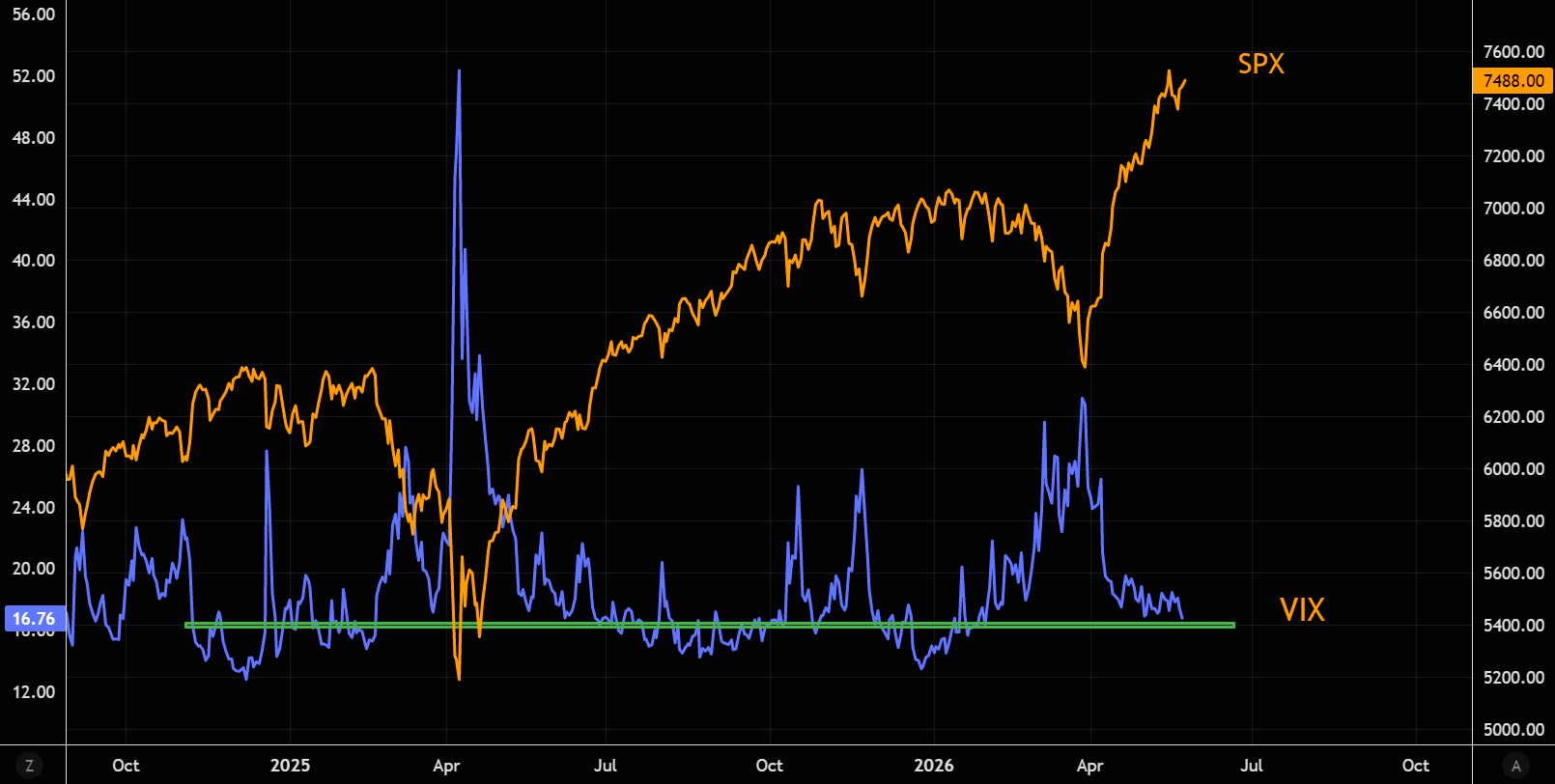
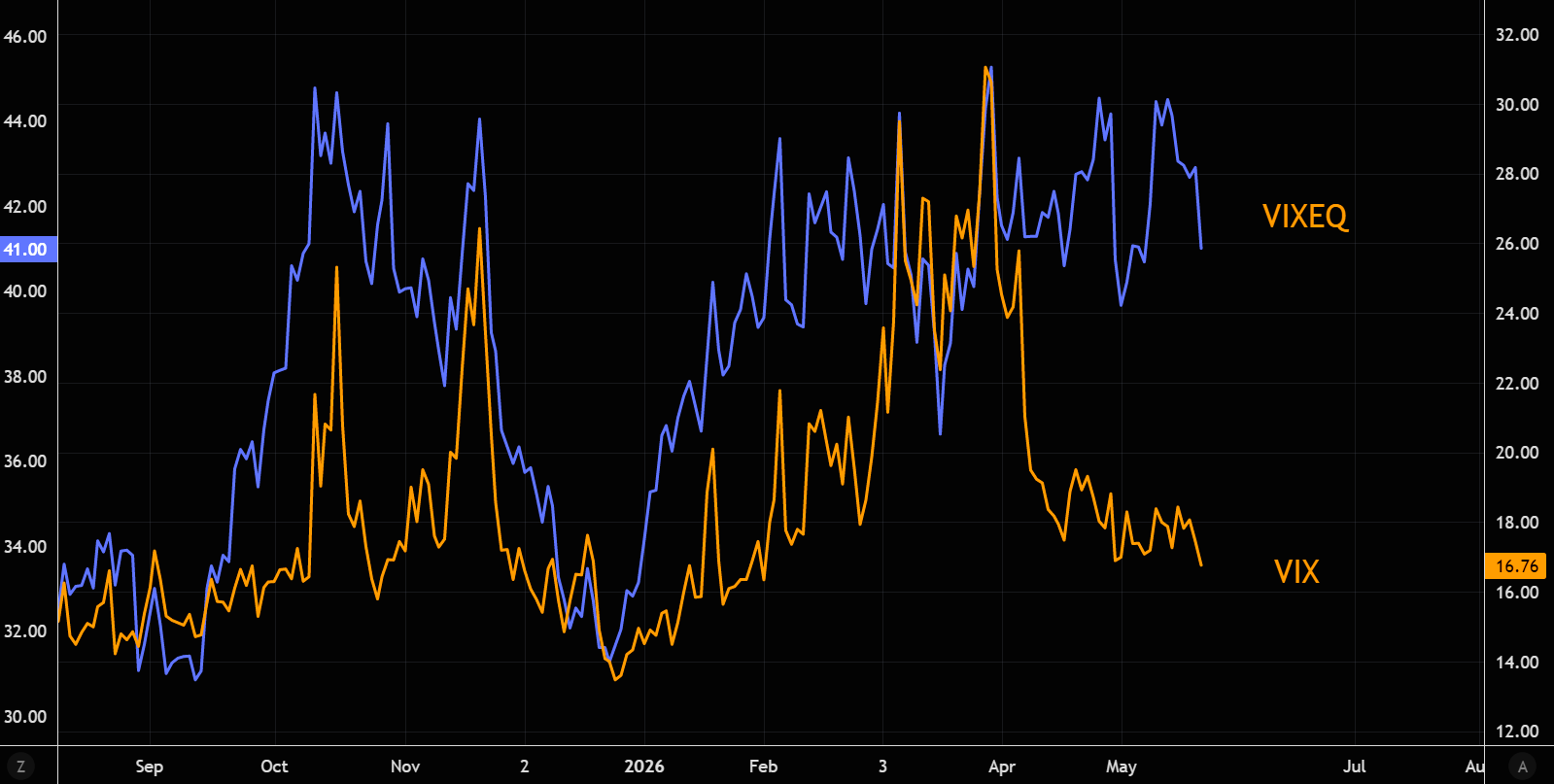
However, not all volatility is decreasing. The single stock option volatility index VIXEQ remains at a relatively high level, with a clear divergence from VIX visible. More critically, the MOVE index, which measures the level of panic in the bond market, has split with the S&P 500 to an extreme level—stocks continue to go their own way against the backdrop of intense volatility in the bond market, and this immunity state is historically short-lived.
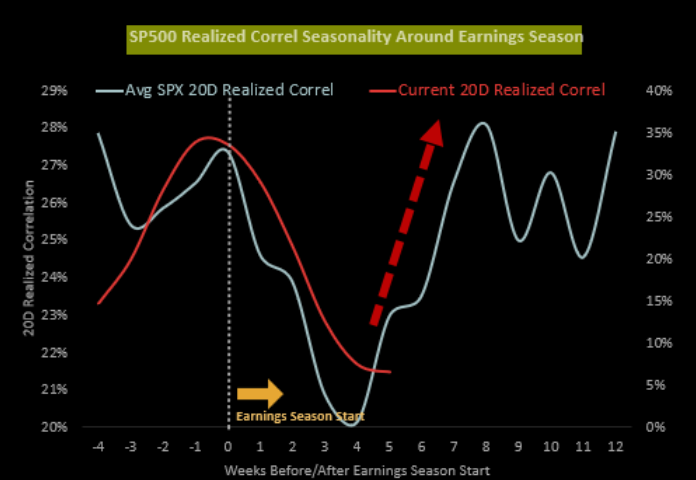
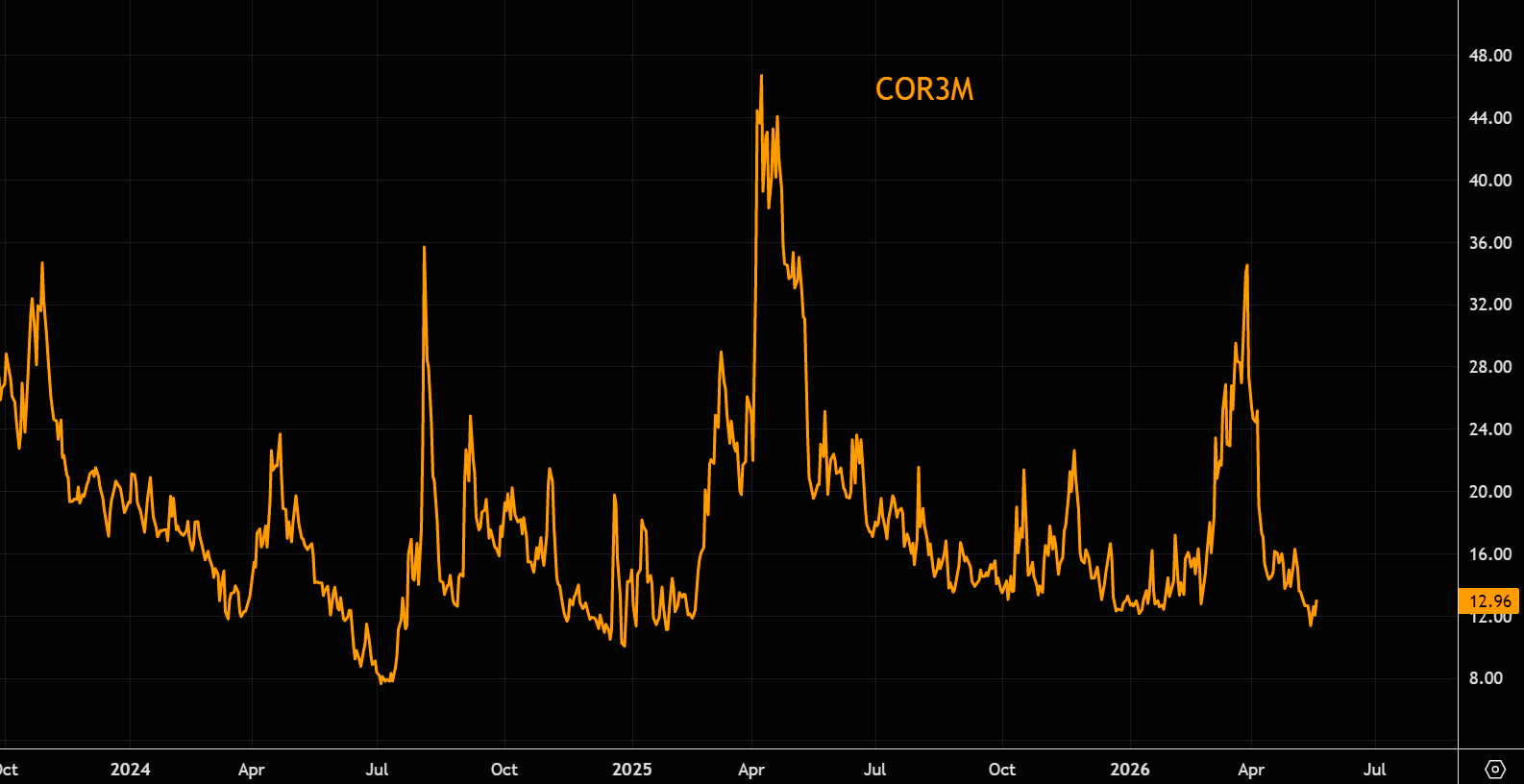
Nomura strategist McElligott pointed out that as earnings season recedes, the market will switch from a micro EPS-driven model back to a macro-driven model. This switch is usually accompanied by a systematic rise in the correlation between individual stocks, and the current implied correlation is at a significantly suppressed level, which means that once the correlation mean reversion occurs, volatility will face a concentrated release.
From a seasonal perspective, the VIX has a historical tendency to have an upward impulse during the current time window, although greater buying opportunities typically occur later in the summer. Against this backdrop, the cost-effectiveness of VIX call spreads is improving—taking the June 20/30 call spread as an example, the maximum payout ratio is about 8 times, and the convexity protection cost is relatively low.
Volatility is often suppressed for a long time, until at some point all assets suddenly move in sync. The current calm may be just the window to reposition protection.
市场有风险,内容仅供研究参考,不构成投资建议。