Google Launches Intelligent Android System Gemini Intelligence
Alphabet's Google unveiled the "Gemini Intelligence" artificial intelligence platform on Wednesday, targeting the Android ecosystem with multi-step task automation, custom generative interfaces, and voice-to-text capabilities, marking the company's most significant effort to date to embed generative AI into everyday mobile usage scenarios.
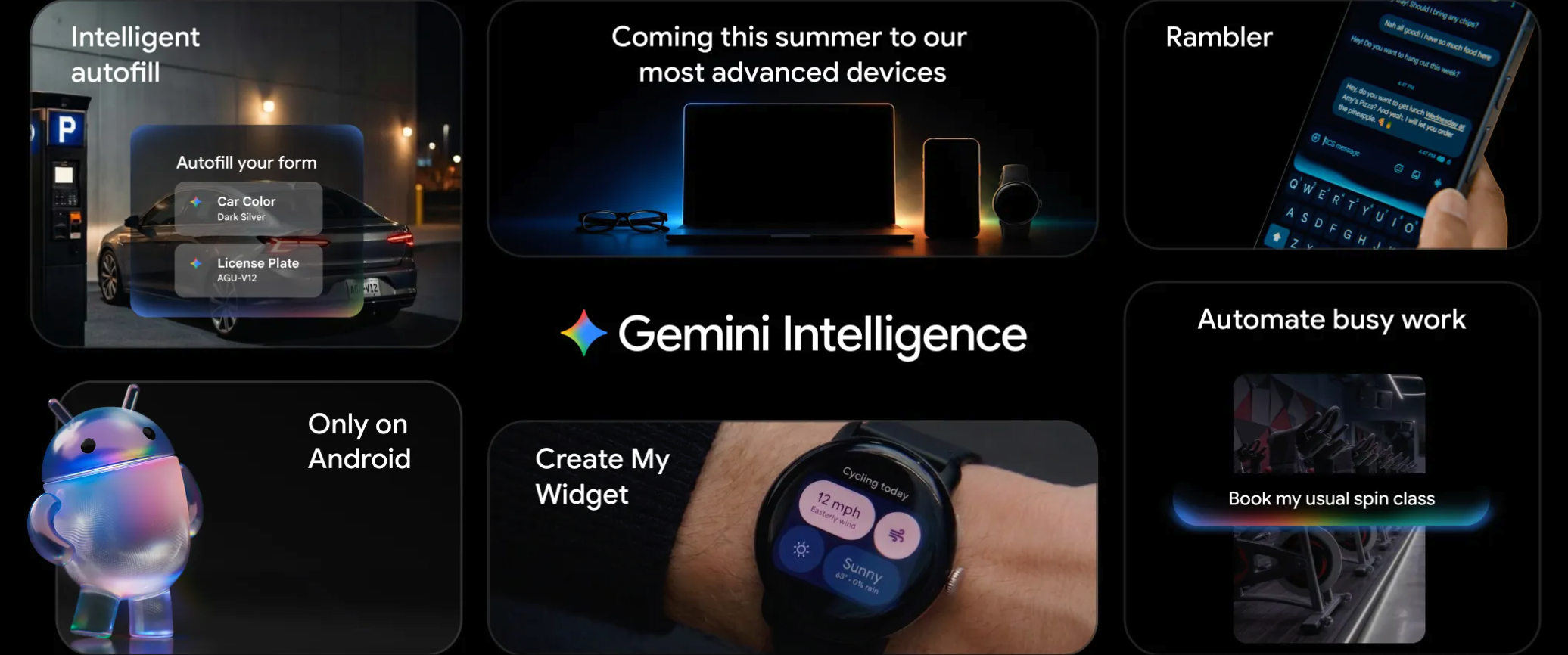
Google said the platform will launch this summer on Samsung Galaxy and Google Pixel flagship models first, with plans to expand to smartwatches, automotive systems, smart glasses, and laptops by the end of 2026.
Multi-step Automation as the Core Selling Point
The core functionality of the platform is cross-application proxy automation—users can delegate complex tasks to Gemini through voice or image commands.
For example, after taking a picture of a travel brochure, users can instruct the assistant to book a similar itinerary for a group of six on Expedia; or simply by speaking to a shopping list in a memo, have Gemini automatically add items to a food delivery cart without ever switching apps.
Google stated that Gemini acts only on explicit user commands and stops immediately after completing the task, clearly addressing the growing concerns about the loss of control over AI autonomous behavior.
Synchronized Upgrades to Browser, Forms, and Voice Features
Starting from late June, the Android version of Chrome will integrate Gemini, offering the ability to conduct web research, summarize content, and autonomously complete daily browsing tasks such as booking appointments and parking reservations. Google also upgraded its auto-fill service, leveraging Gemini's "Personal Intelligence" to smartly fill out complex mobile forms, a feature that operates on an entirely opt-in basis.
The newly built-in feature "Rambler" in the keyboard app Gboard can convert natural spoken language to standardized written text in real-time, supports the use of multiple languages within a single message, and does not retain or store any audio data.
Initial Landing of Generative UI
Google stated it is taking the first step in "generative interfaces"—users can directly generate personalized home screen widgets through natural language descriptions, a feature that supports Wear OS smartwatches. The overall visual design is based on the Material 3 Expressive system, which Google claims has been specifically optimized to minimize distractions during task execution.
This launch further intensifies the AI capabilities competition between Google, Apple, and Microsoft—Apple is deepening the integration of Apple Intelligence on iPhone and Mac platforms, while Microsoft continues to embed Copilot AI into the Windows ecosystem. Analysts view AI on devices as the next main battleground for the smartphone market share competition.
Google has not disclosed specific pricing, nor has it specified which Android hardware tiers, outside of flagship models, will fully support Gemini Intelligence features.
市场有风险,内容仅供研究参考,不构成投资建议。