
From one question to an industry one-pager
Research the commercial space industry with nashnova
“Help me analyze the commercial space value chain.” It was almost a casual question: no market specified, no analytical framework and no required format. A few minutes later, nashnova had produced both a written response and a standalone interactive HTML one-pager.
Product screenshots show the original Chinese interface.
Commercial space often brings rockets, satellites and launch counts to mind. News coverage tends to focus on them too. But researching a value chain means asking a different set of questions: where does investment flow first, which links are in short supply, and what eventually generates recurring revenue?
This conversation did not require repeated follow-ups. The built-in Industry One-Pager skill took the question, gathered sources, mapped the chain and checked listed companies. It packaged the research into an HTML page with interactive value-chain stages, market and evidence filters, company lists, verification metrics, opportunities and risks. This tutorial follows that finished output.
On this page
01 Start with one sentence
The user did not research where to begin or write a long list of requirements covering market size, competition, key stocks and risks. There was just one sentence.
Help me analyze the commercial space value chain.
It then used the built-in Industry One-Pager skill to assess the industry's stage, upstream and downstream relationships, current bottlenecks and whether listed companies were generating real revenue from them. The research also came with a standalone interactive HTML one-pager.
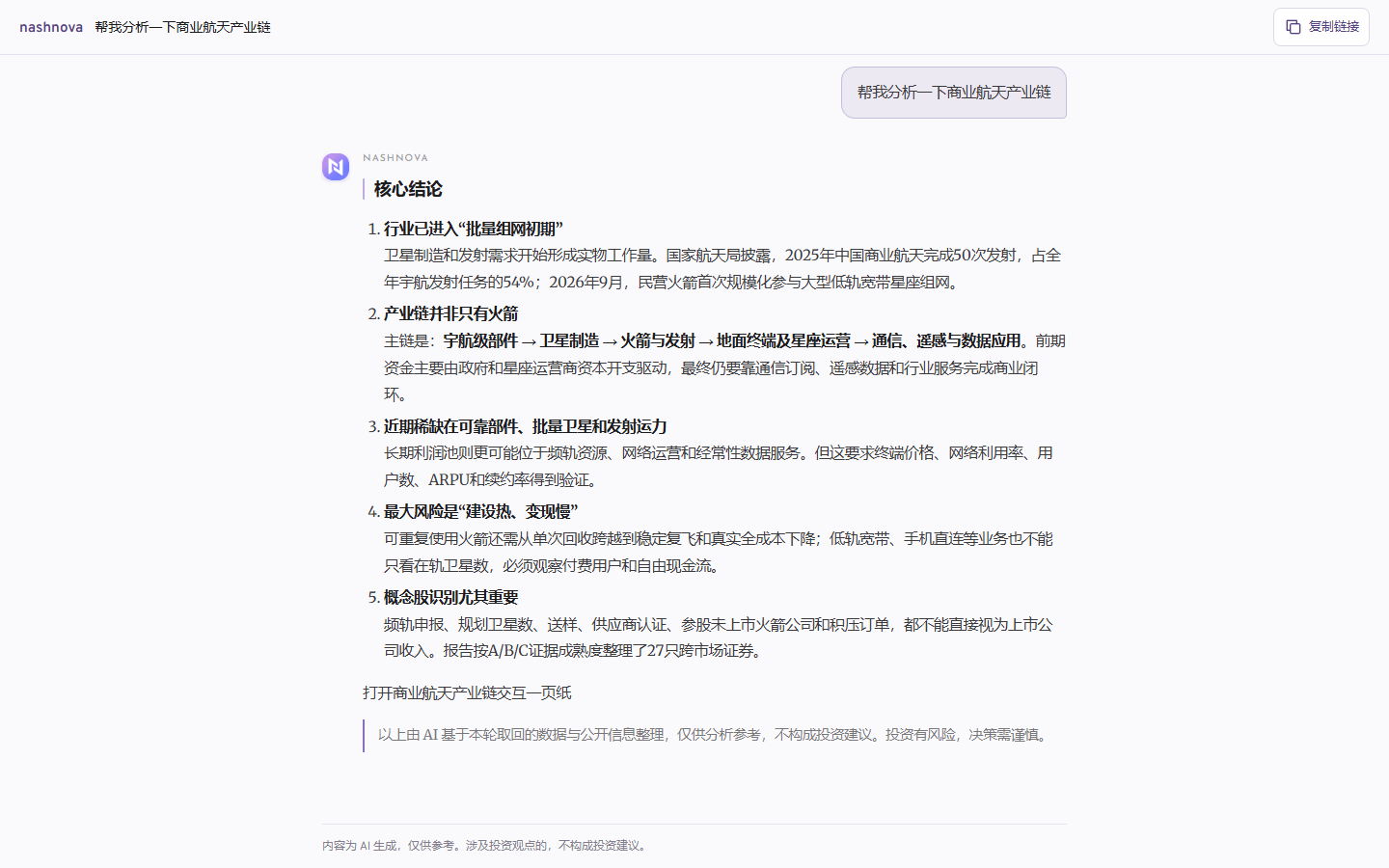
The built-in skill already contains an industry research method. Users do not need to learn prompt engineering first. It does more than list companies: it explains who supplies whom, who has pricing power, where profits may accrue and which claims rest only on thematic links.
One sentence does not replace judgment. It handles a demanding first step: placing information from filings, industry sources and company disclosures onto one map, so readers do not have to reconstruct the chain while switching between websites.
02 Map the value chain
The result opens with a chain from space-grade components to data applications, rather than a stock ranking. Rockets are prominent, but they are only one link.
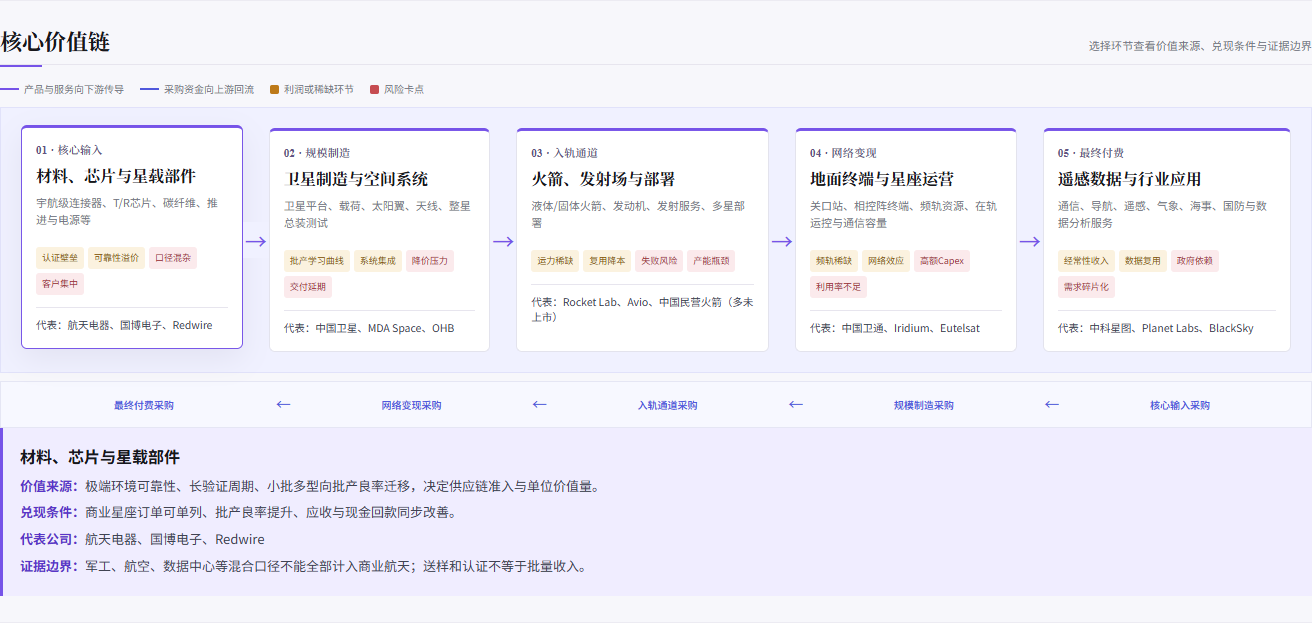
The report placed the industry in the early phase of constellation deployment. That is more specific than calling commercial space a growth theme. Satellite manufacturing and launch demand were generating tangible activity, but terminals, users and business models had not yet matured alongside the network.
Near-term orders were therefore most visible in reliable components, volume satellite production and launch capacity: the inputs needed to build the network. Later, profit pools might shift toward spectrum and orbital resources, network operations and recurring data services. These stages draw on different spending and mature at different times.
Successful launches show that a network is being built. Paying users and free cash flow show that a business is taking shape. The one-pager separates two ideas that are often confused
03 Follow the profits
Launch counts and satellites in orbit are exciting numbers, but the one-pager did not stop there. It followed the chain through to users, fees and cash flow.
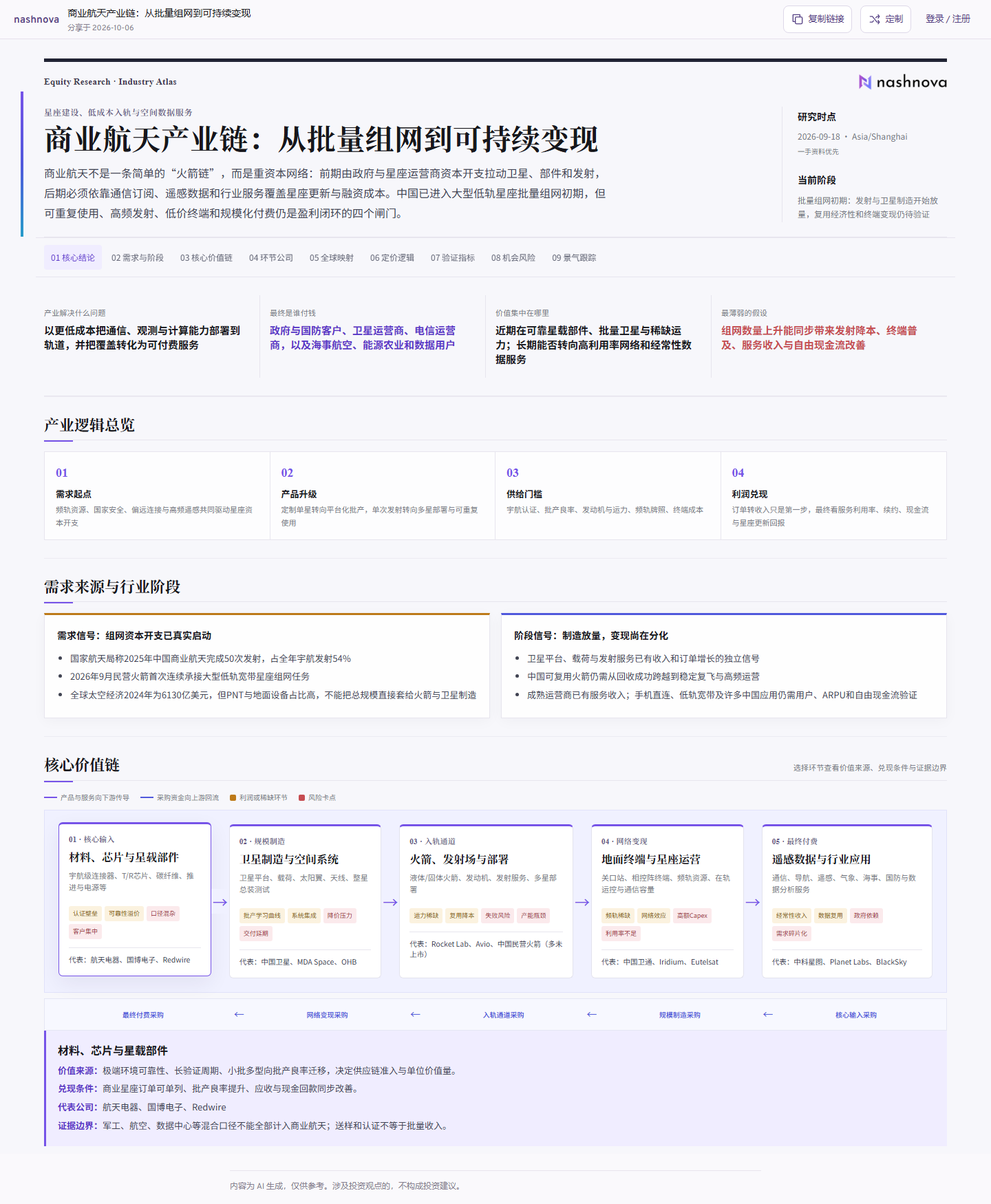
During construction, governments and constellation operators spend first, with orders flowing upstream to components, satellites and launches. End-user applications may not yet be profitable, but they remain essential to the research: those applications ultimately need to support a return on the earlier capital spending.
The result did not translate more launches into a claim that the entire chain benefits equally. It offered two timelines: who wins orders now, and who may retain recurring revenue later. The companies on those timelines may differ.
04 Examine the companies
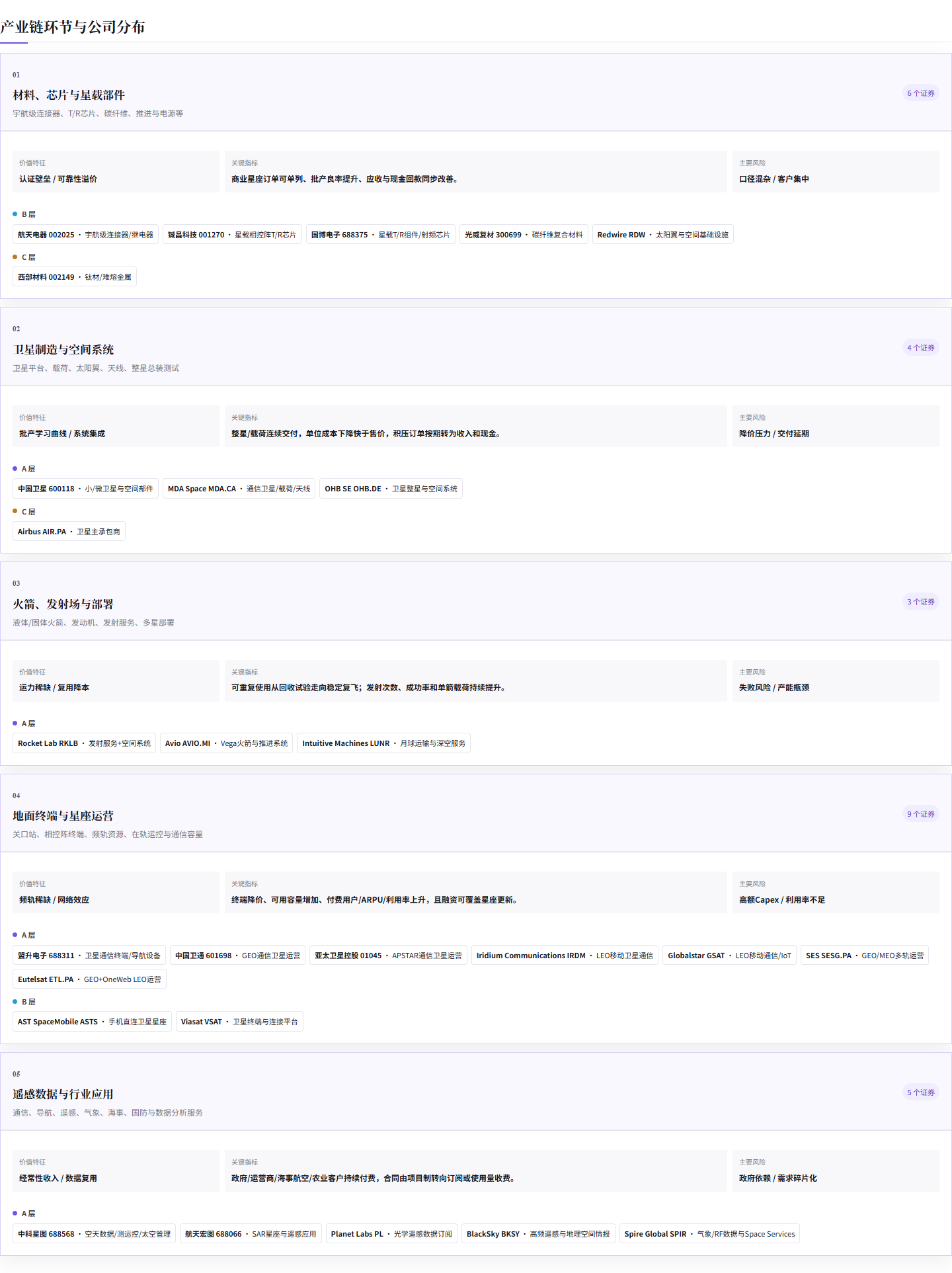
The one-pager covered 27 securities across markets. It did not stop at a list of potential beneficiaries; it examined how far each company's connection to the value chain had progressed.
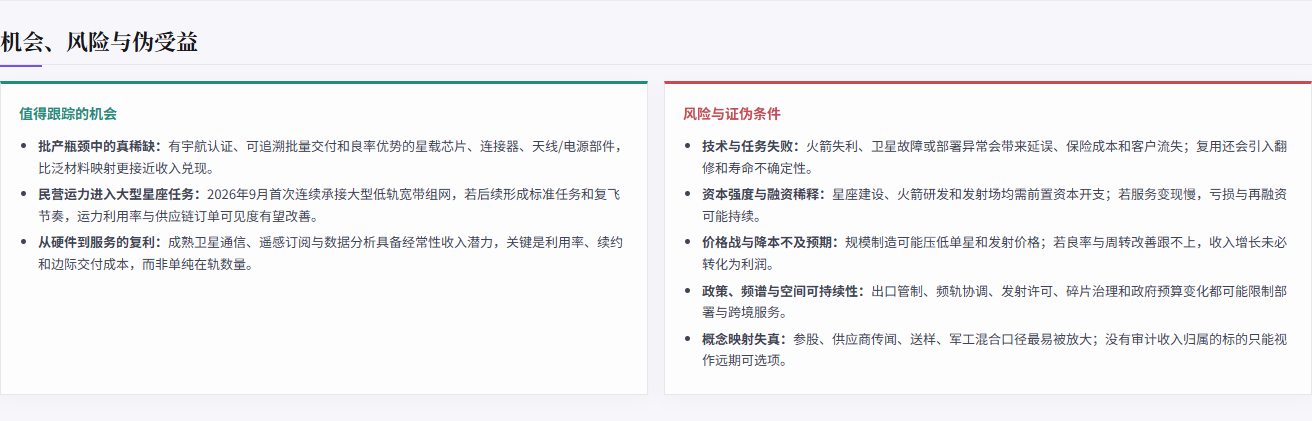
Many commercial-space terms sound closer to revenue than they are. Spectrum and orbital filings indicate eligibility; planned satellite counts are construction targets; samples indicate testing; supplier certification may open a procurement path; and a stake in a private rocket company is an equity relationship. Backlogs are closer to revenue, but delivery and recognition timing still matter.
Calling all of these companies major beneficiaries would turn industry analysis into a collection of thematic stocks. The output used A, B and C evidence tiers to preserve the differences. The labels matter less than avoiding like-for-like comparisons between companies that are still outside the door, have entered the supply chain or are already being paid.
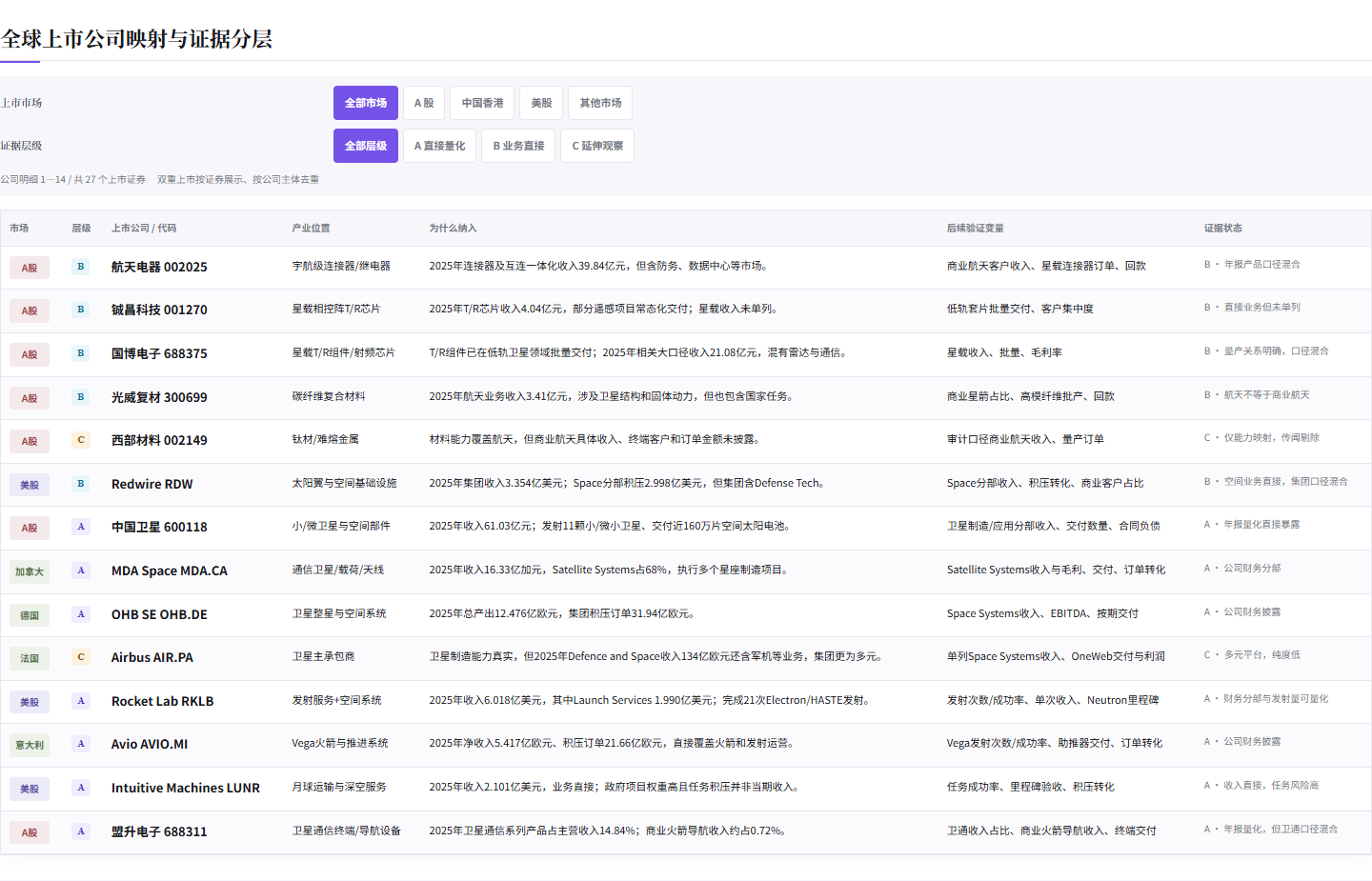
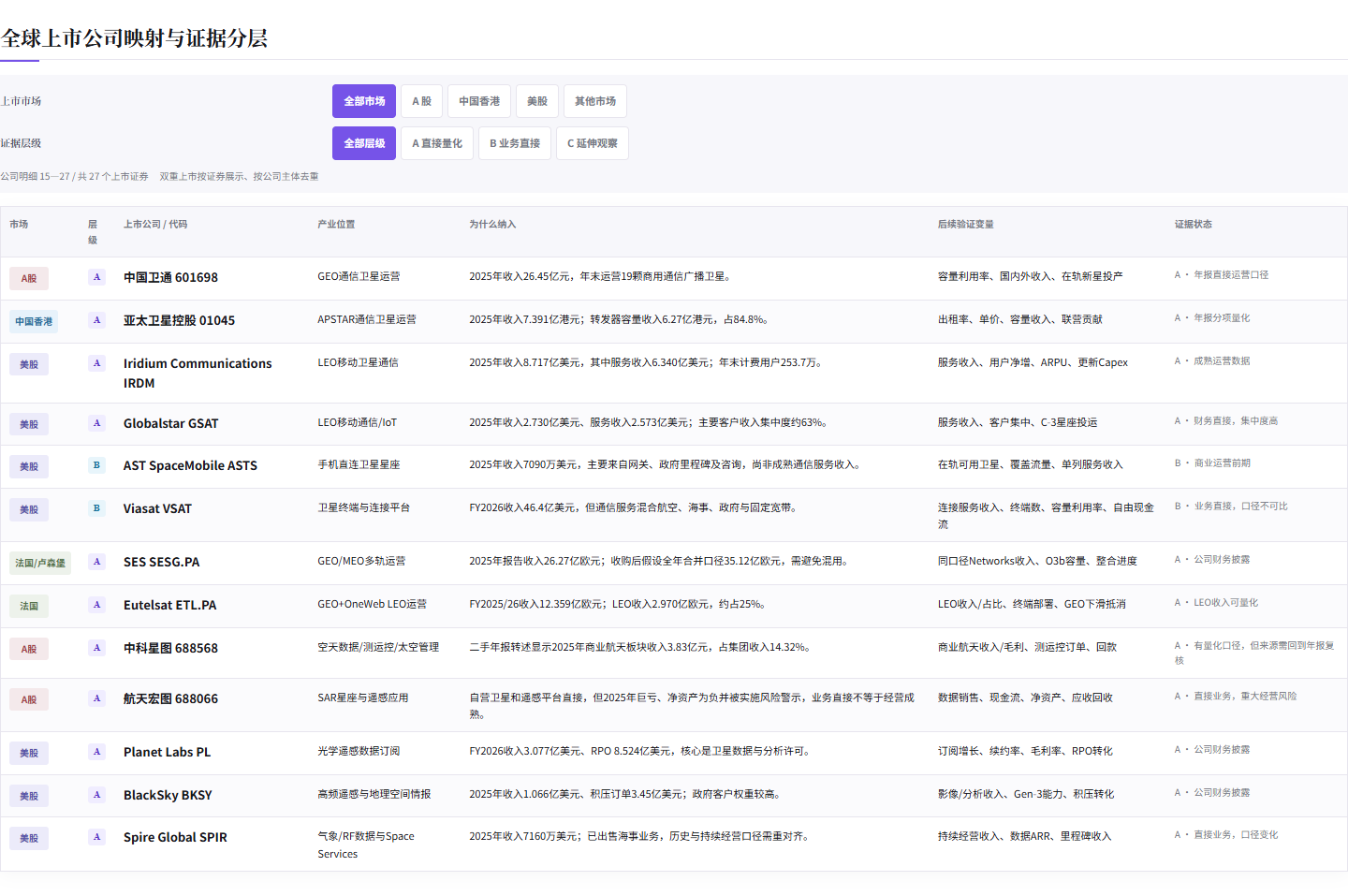
Figures are accompanied by sources and evidence status. Readers can trace revenue, orders and customer relationships back to annual reports, filings and company disclosures to distinguish realized business from developments that still need monitoring.
Expand the satellite manufacturing stage. First verify which mainland China-listed companies have actual revenue and orders, and which are still at the sampling, certification or thematic-association stage. Prioritize company filings and annual reports for key facts.
The first round has already mapped the chain. The next question can focus on the stage that matters most and push the evidence one step closer to financial realization, without explaining the industry again.
05 Try another industry
There was no magic prompt. Let the skill map the chain, then follow up on the most uncertain points that matter to your judgment. The same approach works in other industries.
For humanoid robots, start with the whole chain, then explore reducers, lead screws or dexterous hands. For the low-altitude aviation economy, distinguish aircraft manufacturing, infrastructure and operating services, then ask where orders are landing. The first sentence does not need to read like a prospectus.
Replace commercial space with your topic to start the same workflow. Add “focus on China and mainland-listed stocks” to narrow the scope. To avoid purely thematic names, ask it to distinguish revenue-generating businesses, companies under validation and those with only an indirect connection. Refine the scope through conversation rather than specifying everything at once.
Help me analyze the [industry name] value chain.
Explore the complete interactive one-pager, 27 securities across markets, evidence tiers and sources, then return to the conversation to continue.